
A mother’s story about losing her son to leukemia, and advocating for childhood cancer prevention and early detection.
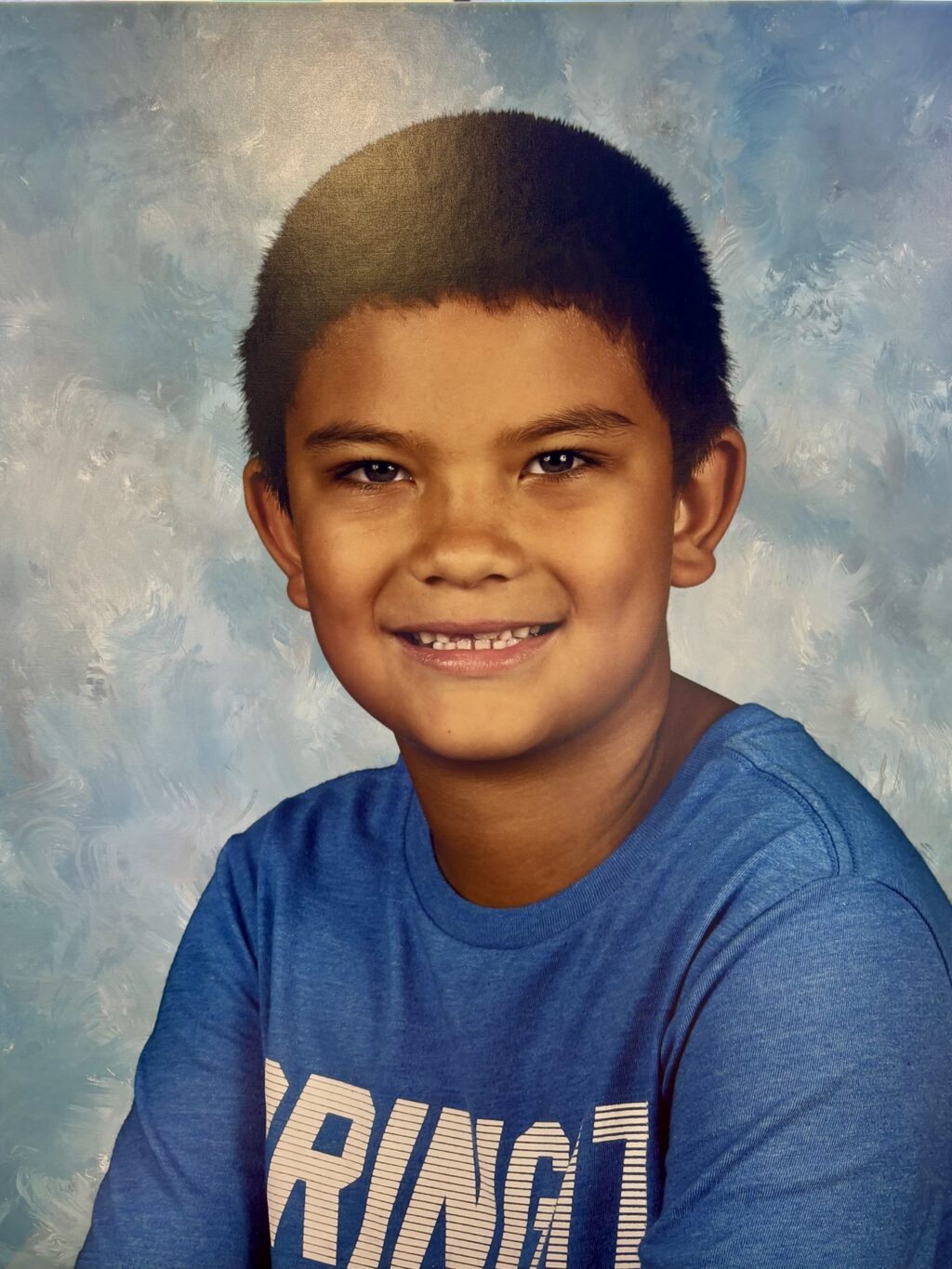
When Lisa Pagán’s son Koa was diagnosed with leukemia, her family’s life changed instantly. Koa was eight years old — funny, protective, outdoorsy, and deeply loyal. He loved fishing, making people laugh, and standing up for fairness. Lisa describes him as the kind of child who noticed when someone was left out and instinctively stepped in. He was a protector and loved coddling his friends’ little siblings. He was patriotic and drawn to military personnel and had a special relationship with one Korean War veteran he befriended and had the honor of being cremated in his uniform.
“He was strong-willed in the best way,” Lisa said. “If he believed something was right, he stood by it.”
Koa died just five days after his diagnosis due to complications from a brain bleed caused by the leukemia. The shock of losing an otherwise healthy child so suddenly left Lisa searching for answers — not out of blame, but out of a need for understanding.
Above: Koa Pagán
“I asked, ‘Why did Koa get leukemia? What caused this in his perfect, strong, healthy, little body?’” Lisa recalled. “And the response was compassionate: ‘It wasn’t your fault. There’s nothing you could have done.’ But I wasn’t asking for the sake of blaming. I was asking for understanding of how my young child gets cancer, without warning, and without a lifetime of habits or exposures to cause it.” That distinction has become central to her advocacy work.
Asking Earlier Questions
Before Koa’s diagnosis, Lisa spent 27 years working in healthcare, helping patients understand the importance of prevention and long-term health. She believed her family was making informed, healthy choices. Like many parents, she focused on nutrition, breastfeeding, and reducing harmful exposures where she could.
“What struck me immediately was how much certainty existed around treatment protocols, while at the same time there seemed to be so few answers about why childhood leukemia develops in the first place, how risk could potentially be identified earlier, or whether prevention pathways even existed.” Lisa mused, “In my work experience, prevention and risk stratification were foundational concepts. Yet in childhood cancer, there appeared to be very little infrastructure for identifying risk before a child becomes critically ill.”
After Koa died, she found herself confronting difficult questions that felt largely absent from the broader childhood cancer conversation. “The shock of how leukemia could have happened never wore off,” she says. “Knowing all the things we did to protect our family’s health, I couldn’t stop asking: Why did this happen to us? Why are childhood cancers increasing? Why don’t we understand more about causes, risk, or prevention? And why is there essentially no early detection for children?”
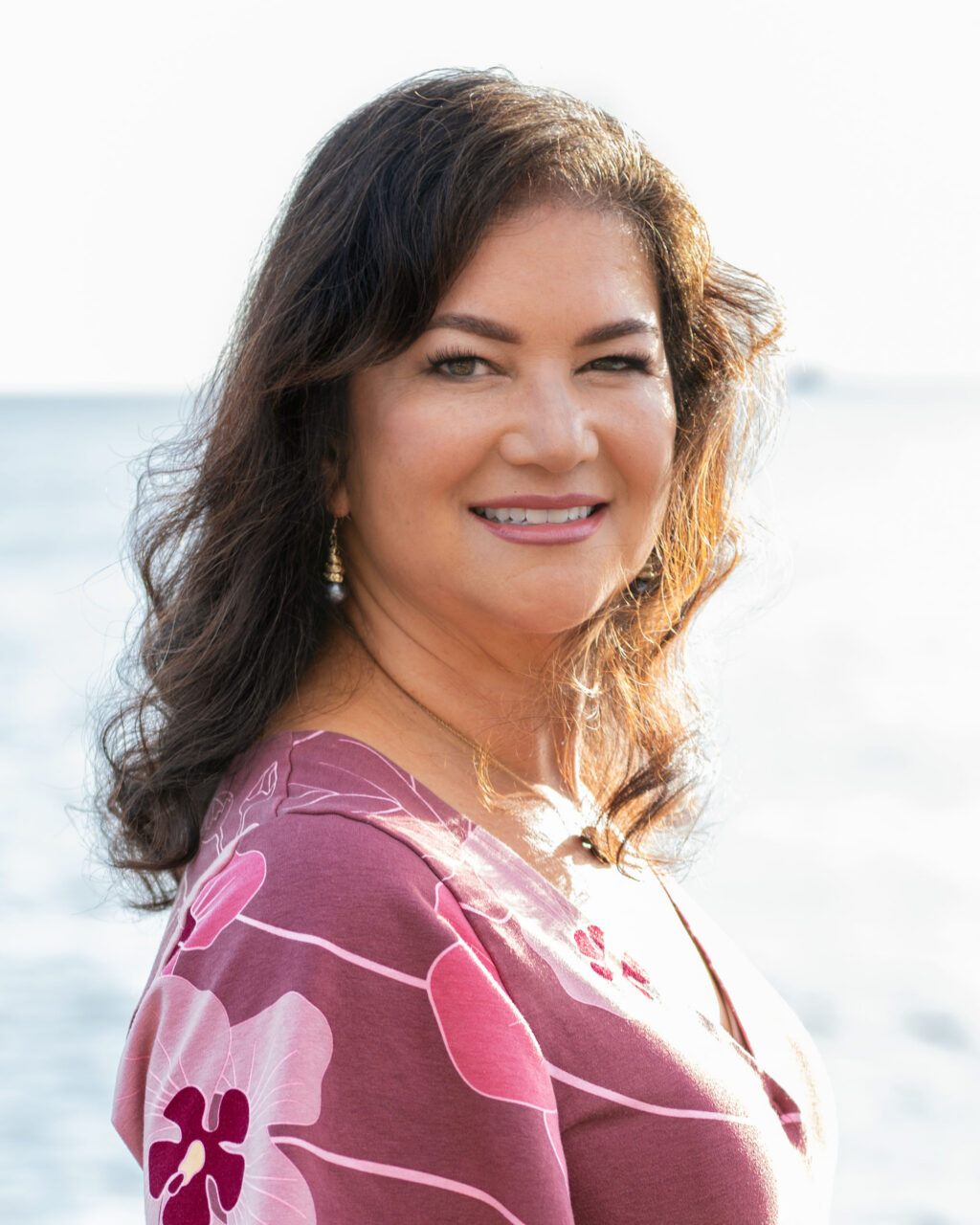
“I couldn’t stop asking: Why did this happen to us? Why are childhood cancers increasing? Why don’t we understand more about causes, risk, or prevention? And why is there essentially no early detection for children?”
-Lisa Pagán, Founder & Executive Director of KoaStrong
Above: Lisa Pagán
Those questions eventually led Lisa to establish KoaStrong, a childhood cancer prevention organization focused on advancing prevention research, supporting early detection efforts, encouraging scientific collaboration, and advocating for systems-level change that protects children before they ever become patients. “Our mission is not to replace treatment research,” she explained. “Children absolutely need better treatments. But prevention and early detection have historically received far less attention.”
Prevention Without Blame
One of the most striking aspects of Lisa’s advocacy is the way she navigates conversations around environmental exposures and childhood cancer risk with both urgency and compassion. “I think it’s important to focus on curiosity, prevention without blame, systems change over individual guilt, evidence over fear, and hope alongside uncertainty,” she said. Lisa emphasizes that no single product, parenting choice, or exposure explains childhood cancer. The science is complex, and many questions remain unanswered. But she believes families deserve transparent conversations about what researchers are studying — especially as evidence continues to emerge around environmental exposures, prenatal health, genomics, and early-life risk factors.
“If it can happen to our family, it can happen to anyone’s,” she said. “If we accept childhood cancer as completely random and unavoidable, we risk investing less in understanding environmental influences, biologic pathways, genomic risk, and opportunities for earlier detection.” For Lisa, meaningful prevention means shifting responsibility away from individual parents and toward systems designed to protect children by default. “That looks like cleaner air, water, and environments; stronger environmental protections; improved exposure monitoring; better prenatal and early childhood supports; earlier detection tools; and research funding that prioritizes causes, not only treatments,” she said. “Children’s health shouldn’t depend solely on an individual’s knowledge for protection.”
Building a Broader Prevention Movement
Lisa sees childhood cancer prevention as a challenge that requires collaboration across disciplines — researchers, healthcare providers, public health experts, advocates, and families all working together. “The most meaningful collaborations are the ones where families, scientists, clinicians, and public health experts sit at the same table,” she said. She is particularly hopeful about growing collaboration around environmental exposure research, longitudinal population studies, genomic and newborn screening innovation, earlier diagnosis pathways, and prevention-informed public policy.
She also believes healthcare providers play an important role in helping families feel heard when they ask difficult questions after a diagnosis. “I love that providers don’t want parents to feel blame,” she reflected. “But I think sometimes they miss that families aren’t asking to blame someone. We’re asking [about childhood cancer causes] because there’s still so much we don’t understand.”
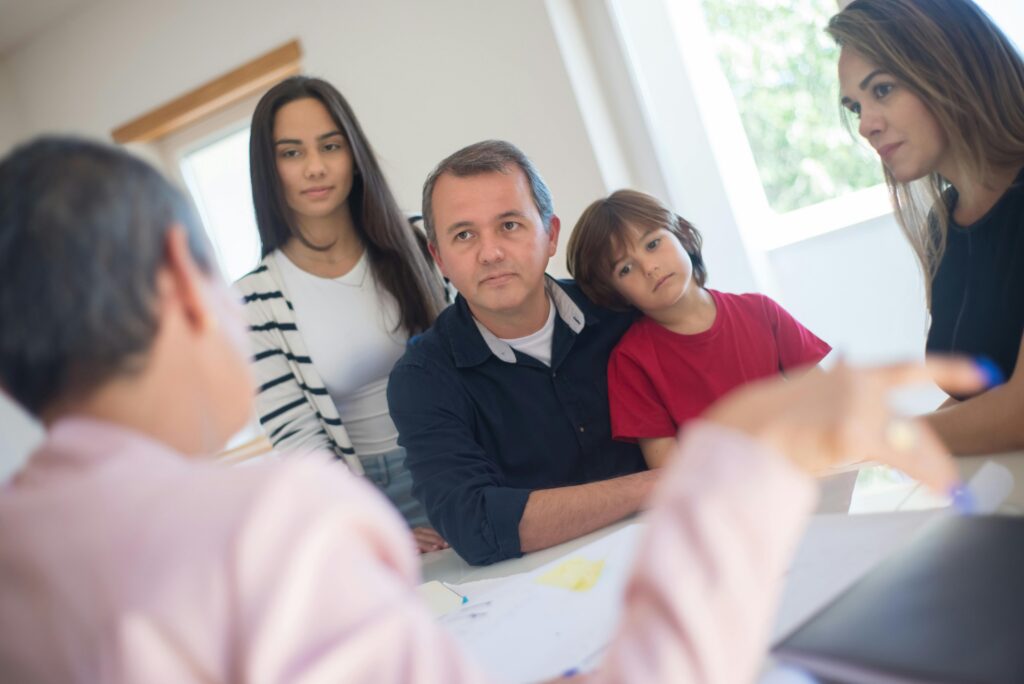
“The most meaningful collaborations are the ones where families, scientists, clinicians, and public health experts sit at the same table.”
–Lisa Pagán, Founder & Executive Director of KoaStrong
Above: A family meeting.
Rise Up for Kids
That perspective has helped shape KoaStrong’s expanding work, including community education and the organization’s “Rise Up for Kids” initiative, which encourages schools, teams, businesses, community groups, and individuals to take a visible stand for childhood cancer prevention and early detection.
The campaign is rooted in the belief that awareness should lead to action. Through educational outreach, advocacy, fundraising, and community events, participants help raise the visibility of childhood cancer prevention while supporting research and systems change that protect children’s health.
KoaStrong also shares trusted educational materials from organizations like PEHSU’s Childhood Cancer and the Environment Program to help families and communities better understand environmental health and practical ways to reduce exposures without fear or blame. “We would love to see more schools, healthcare organizations, youth groups, and community partners join the movement and help ‘Rise Up For Kids,’” says Lisa. To learn more and host your own event, visit www.koastrong.org
Finding Hope
Despite the grief that continues to shape her work, Lisa remains hopeful. She finds hope in scientists asking difficult questions. In organizations collaborating instead of competing. In the growing recognition that childhood cancer prevention deserves a place alongside treatment and survivorship in research and policy conversations.
“Twenty years ago, prevention may not have been part of this discussion,” she said. “Today it is. And that tells me progress is possible.” For Lisa, Koa’s story is not only about loss. It is also about possibility — the possibility of building systems, science, and conversations that better protect future generations of children. “The greatest loss isn’t only that he died from cancer suddenly at eight years old,” she said. “It’s all the years of who he would have continued becoming.”
“Twenty years ago, prevention may not have been part of this discussion. Today it is. And that tells me progress is possible.”
-Lisa Pagán, Founder & Executive Director of KoaStrong
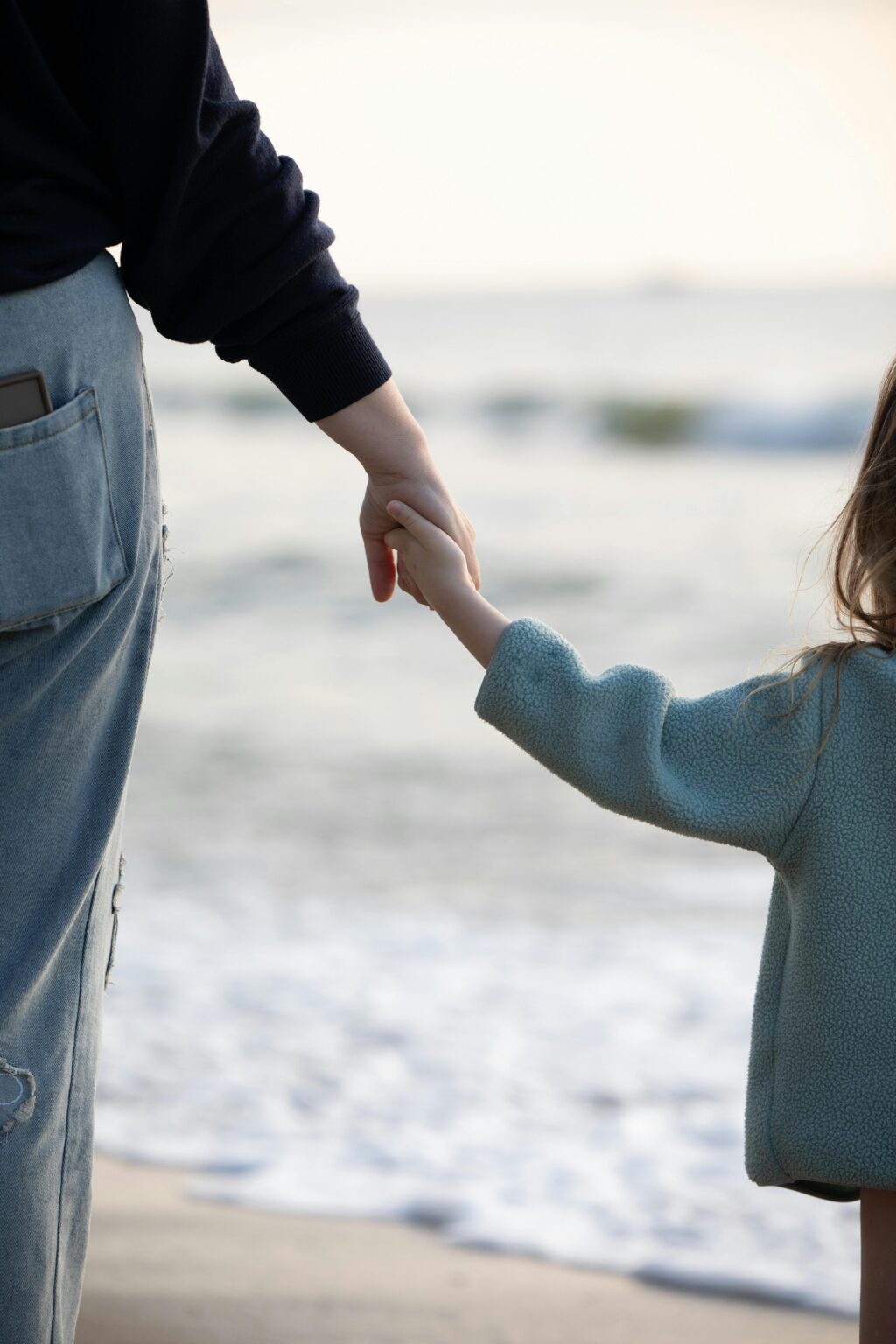
Above: Parent and child holding hands.
Author: Hannah Wilkerson, Children’s Environmental Health Network
Learn More About the Childhood Cancer & the Environment Program (CCEP)
The Childhood Cancer & the Environment Program (CCEP) is a national program of the PEHSU Network to educate pediatric health care providers, parents, and caregivers about environmental influences on childhood cancers such as leukemia. The program educates clinicians and families on practical ways to prevent childhood cancer and improve treatment outcomes and survivorship.
View the families & communities page here.
View the clinicians page here.
Content Reviewed by the PEHSU National Program Office