
Featuring Dr. Alan Woolf
How does water quality affect children’s health? What’s important to know about water in schools, water in wells, and tap water?
Alan Woolf, MD, MPH, FAAP, FACMT, FAACT discusses water quality and children’s health in this episode of Pediatric Environmental Health Radio. Dr. Alan Woolf is Co-Director of the Pediatric Environmental Health Center at Boston Children’s Hospital and its Pediatric Environmental Health Fellowship Training Program and Co-Director of the Region 1 New England Pediatric Environmental Health Specialty Unit. He is a Professor of Pediatrics at Harvard Medical School. Dr. Woolf is a past-president of both the American Academy of Clinical Toxicology (AACT) and the American Association of Poison Control Centers. Dr. Woolf has published extensively on childhood poisonings, poisoning prevention and toxic reactions to heavy metals. He is the Medical Editor of two books: The Children’s Hospital Guide to Your Child’s Health and Development and most recently: The History of Modern Clinical Toxicology (Elsevier 2022).
Listen Here
Play the podcast in the web player below.

It’s also available on Spotify and iTunes. View the transcript at bottom of the page.
Resources
Transcript
Whitney Sterten-Hall: Great. All right, well today I’m talking to PEHSU expert and pediatrician Dr. Dr. Alan Woolf. What is your current role with PEHSU? How long have you been involved and what brought you to PEHSU in the first place?
Dr. Alan Woolf: Well, thanks so much for the invitation to do this Whitney Sterten-Hall and I’ve been involved with the PEHSU’s since they started in 1998 and have been a director since that time.
So, my role at that time and really hasn’t changed has been to fulfill the PEHSU’s objectives in public and professional education outreach in clinical consultations for children and their families and for the training of health professionals. These have always been the PEHSU activities over the past almost 28 years now and more recently I also have Dr. Marissa Houtman as my co-medical director and Dr. Shalini Shah as our assistant director and also Kim Manning does a wonderful job as our PEHSU coordinator. So, this has been a long journey for me and a very gratifying and fruitful one.
Whitney Sterten-Hall: That’s great. It’s a lot of history with PEHSU definitely. Well, you’re also a professor of pediatrics at Harvard Medical School. I’m curious how long you’ve been teaching there and over time have you seen more of a focus on environmental health in just in conversation or even curriculum among students or faculty?
Dr. Alan Woolf: Yeah, I certainly have and I’ve been with Harvard since 1983 and teaching at the medical school. I was responsible in the 1980s for the pediatric segment of the ICM or the introduction to clinical medicine that at Harvard with their new curriculum in the 1990s turned into patient doctor too. So, we taught medical students sort of the fundamentals of how to examine kids, how to interview their families, the kinds of illnesses they suffered from and so forth.
But I’ve noticed and especially over the last five or ten years a lot more interest in pediatric environmental health issues among the Harvard faculty and the Harvard students. And here in the region one PEHSU we actually petitioned Harvard to start an elective in pediatric environmental health that’s open to fourth year Harvard medical students and we’ve been running that now for two or three years… and that’s been a new initiative that we are very proud that we got through the Harvard curriculum committees and got them to start. So, it has been a real change in direction for the medical school to get to respond to student interest in these topics.
Whitney Sterten-Hall: Nice, that’s wonderful. Well, what sparked your initial interest in environmental health and pediatrics?
Dr. Alan Woolf: Yeah, well, I did my own medical school training at the University of Chicago and then did my pediatrics residency at Duke University and also did a fellowship there in general academic pediatrics. And I got interested in childhood injuries and poisonings because there wasn’t a lot of research in that area in terms of the epidemiology and the outcomes of what happened to children and their families as this was in the 1970s.
So by the 1980s I really developed an interest in childhood poisonings and when I arrived at Children’s I was approached by the Cape Cod Planning and Economic Development Commission this was back in 1983 because they were concerned about the source of drinking water on Cape Cod. Cape Cod if you know the area is kind of a sandy gravelly soil and is what’s called a sole source aquifer and they were noticing that there were more chemicals in the aquifer that posed a threat to the drinking water. And with their officials and some volunteers we organized the first household hazardous waste cleanup in Cape Cod in 1984 and we had seven sites around the Cape where people could turn in old paint, old solvents, old kerosene, paint thinner or what have you.
And that was such a success it’s still going today in 2026 they have quarterly household waste return events and so I’m very proud of that that’s how I really got interested in this topic.
Whitney Sterten-Hall: That’s great to hear that it’s had such a long-term effect too. Well that’s a perfect transition today we’re talking about water quality and children’s health. Something that struck me as a parent was just how many chemicals there are to be mindful of that families can be exposed to. So you know there’s PFAS in the conversation a lot, lead, but there’s also things like arsenic, nitrates, pesticide, even gasoline. And lead is usually what PEHSU hears about the most in terms of concerns from families or communities. How much of a concern do you think these other chemicals are? So should any family who lives near a farm or a factory or refinery for example test their water quality? Should all families be testing their water quality?
Dr. Alan Woolf: I think those are great questions and you’re right lead in drinking water is still a concern across the country and not only for people who are on municipal water but also those 15% of the population who are on private wells for their drinking water. I mean that’s almost 49 million people with the depend on private wells for their water. So that’s a big concern and it goes beyond lead.
For those on municipal water, on city water, the city and the state have the responsibility of checking their water, usually quarterly for chemical contaminants. And they’re under federal regulations from the EPA to ensure that there are no designated chemicals above the EPA threshold. And if there are exceedances then they have to notify every consumer of that public drinking water.
So you can rest assured if you’re on city water that the water is safe unless you’ve received a notice from the city. Still you do have to be concerned about the plumbing in your house and the standpipe that carries the water from the service line to your house or your apartment. And those if they’re older can be made out of lead or have lead solder.
So that’s a concern. On the other hand for those who are on private wells for their drinking water, those are not under federal regulations and the state and local regulations of private wells are pretty loose and quite variable from state to state. So there’s not much protection there and it’s up to the well owner, that is the family, to test their water.
So that’s a concern because their water can, like you say, be contaminated with man-made chemicals such as PFAS but also a lot of natural chemicals that are part of the geology like radon or arsenic or uranium or other chemicals that can be harmful to their health and their children’s health. So one way to frame this is private well owners need to be informed and need to test their water themselves to make sure that it’s safe.
Whitney Sterten-Hall: Are there national standards for chemicals in water that can do good things? I’m thinking of chemicals used to treat water, so like chlorine or ones that have benefits like fluoride. And then if someone has a private well, are they advised to be adding a certain amount of chemicals like that in?
Dr. Alan Woolf: A great point. And if you’re on municipal water, your water is probably chlorinated by the water department and that ensures that the water does not have bacteria in it.
So that’s why it’s called total trihalomethanes or TTHM are usually chlorinated byproducts that are there in minute amounts, not a threat to health as a result of making sure that the water is safe from bacterial contamination. The American Academy of Pediatrics and the American Dental Association continue to advocate for adding fluoride to water to prevent tooth decay in children. So in most states and in most towns, fluoride is still added to water.
If you’re on a private well, it’s not so simple. Again, the key is to get your water tested. The American Academy of Pediatrics recommends that you test that water annually for coliform bacteria and for nitrates, as well as for total solids and pH.
And then every three years for a more comprehensive list of chemicals to ensure that it’s safe. And since your well water may indeed not have any fluoride in it, that’s best to talk to your pediatric health professional, whether a nurse practitioner or a physician’s assistant or your pediatrician about other ways that your child can get the needed fluoride treatments.
Whitney Sterten-Hall: Okay, thank you. Well, I know you’ve spoken a lot about well water with health professionals. Can you elaborate about what you usually cover in those talks and how this came to be a focus of your work? And then I’m also curious if private wells are mostly used by people in rural areas or if you find them in urban areas too.
Dr. Alan Woolf: Yeah, I do give talks on drinking water. And we talk there about the many different contaminants that can pose a threat, either biological, not only bacteria, but also viruses that can be in water, but also chemicals like PFAS, arsenic, lead, and so forth. So we talk about the health impacts that those can have and the recommendations in terms of families getting their water tested if they’re on private wells. I think the main point for pediatric health professionals that I talk with is to try to have everyone include asking families where they get their water during well childcare.
If we had pediatric practitioners asking that question, and then if they said well water, then going into a little bit further about how they ensure their well water is safe, that would be a tremendous benefit to families across the country, in my opinion. Like you say, private wells are frequently seen in rural communities and rural areas. But depending on how big the town is, it may not have the resources to have a municipal water system.
So even in small towns, people can still be on well water, private well water. So it’s important for them to know what to do.
Whitney Sterten-Hall: Oh, interesting. Well, if a family is worried about their water quality, is it enough to just test on their own? So you can get tests on Amazon things that come to your house. Are those trustworthy or should they be contacting a third party for testing or only do that if these at-home tests have worrisome results?
Dr. Alan Woolf: Well, they should consult authoritative websites. For example, those local or state websites that give advice to private well owners as to how to get their water tested.
Because like you say, you’ve got to make sure that where you’re sending the water to be tested is credible, is certified to do laboratory testing for a range of chemicals, and that you can have some confidence in the results. That’s the best way. And I’ve got to say, Whitney Sterten-Hall, that many families who move into homes with private wells, if they haven’t lived in such a home before and have no experience with a private well, they don’t necessarily know what to do.
So they may not even be aware they need to test the water. I had a family that was living in a home for four or five years, and they only got the water tested when the mother noticed as she was gardening and watering her plants that the leaves on the plants were like this silvery copper sheen color. And when they got their water finally tested, it had elevated levels of manganese, elevated levels of copper and iron.
Their child was having some symptoms of poisoning that they didn’t know what it was from, and it turns out it was from their untested well water. So it’s a real important point. If there was a take home from this podcast, it’s that health care providers should be encouraging families who are on private wells to get their water tested annually.
Whitney Sterten-Hall: Wow, gosh, that’s disturbing. Thank you for sharing that. That’s a really good example. What are some signs or symptoms you might expect to see in a child affected by contaminated water? Is it mostly in behavioral symptoms in your patients? Have you seen mostly symptoms related to lead?
Dr. Alan Woolf: Well, we’re certainly concerned about lead. And as you know, water is a source of lead in the environment, but certainly not the only source. And what we see here in Massachusetts, of course, is a lot of children with elevated blood lead levels due to paint, due to lead containing dust in their homes, due to lead from soil outside the home, and other environmental sources.
But it’s also important to note that you can have very high lead levels as a child and show no symptoms of it at all. It’s not until your blood lead level gets to very high levels that you start to have symptoms like abdominal pain or drowsiness, fatigue, and anemia that makes you pale and tired, or even what we call encephalopathy. That is, the lead is getting into the brain and disrupting the brain’s function.
For most kids who have elevated lead levels at lower levels, there are no symptoms at all, which is why in Massachusetts and New Hampshire and Rhode Island and some other states, there’s universal testing of all children who are age one and two, and sometimes even age three, four, five. Everybody gets their blood tested to see whether they have an elevated lead level because you don’t necessarily have symptoms and signs of it. In terms of other contaminants, the ones that are likely to cause symptoms are the coliform bacteria or E. coli, and those will cause GI effects.
So when you have all family members complaining of nausea, or they may be vomiting, or their appetites are off, or they have diarrhea, then you should start to suspect your well water might be contaminated with these bacteria. There are some other contaminants of water Whitney Sterten-Hall that differ in their symptoms and signs of poisoning depending on which contaminant they are. So radon over the long term has been associated with elevated rates of lung cancer in adults, and you can get that from your water and from showering and so forth, as well as other air sources of radon.
Arsenic is associated with neurologic symptoms and skin changes and long term cancer effects. Uranium is associated with kidney disease in adults, so it really depends on what the contamination is, but a lot of them do cause such sorts of health effects as I’ve talked about here.
Whitney Sterten-Hall: Okay, a lot to be mindful of. What are some steps you would recommend to families who want to improve their water quality at home?
Dr. Alan Woolf: Well, again, if they’re on well water, getting it tested every year to make sure that it’s safe is important. And if it isn’t, if they have contaminants in well water, then I would suggest getting a private well engineer, a hydrologist, somebody who has experience with remediating wells to help them determine what’s needed in order to make that well safe. Sometimes there are things they can do at the point of entry to a house.
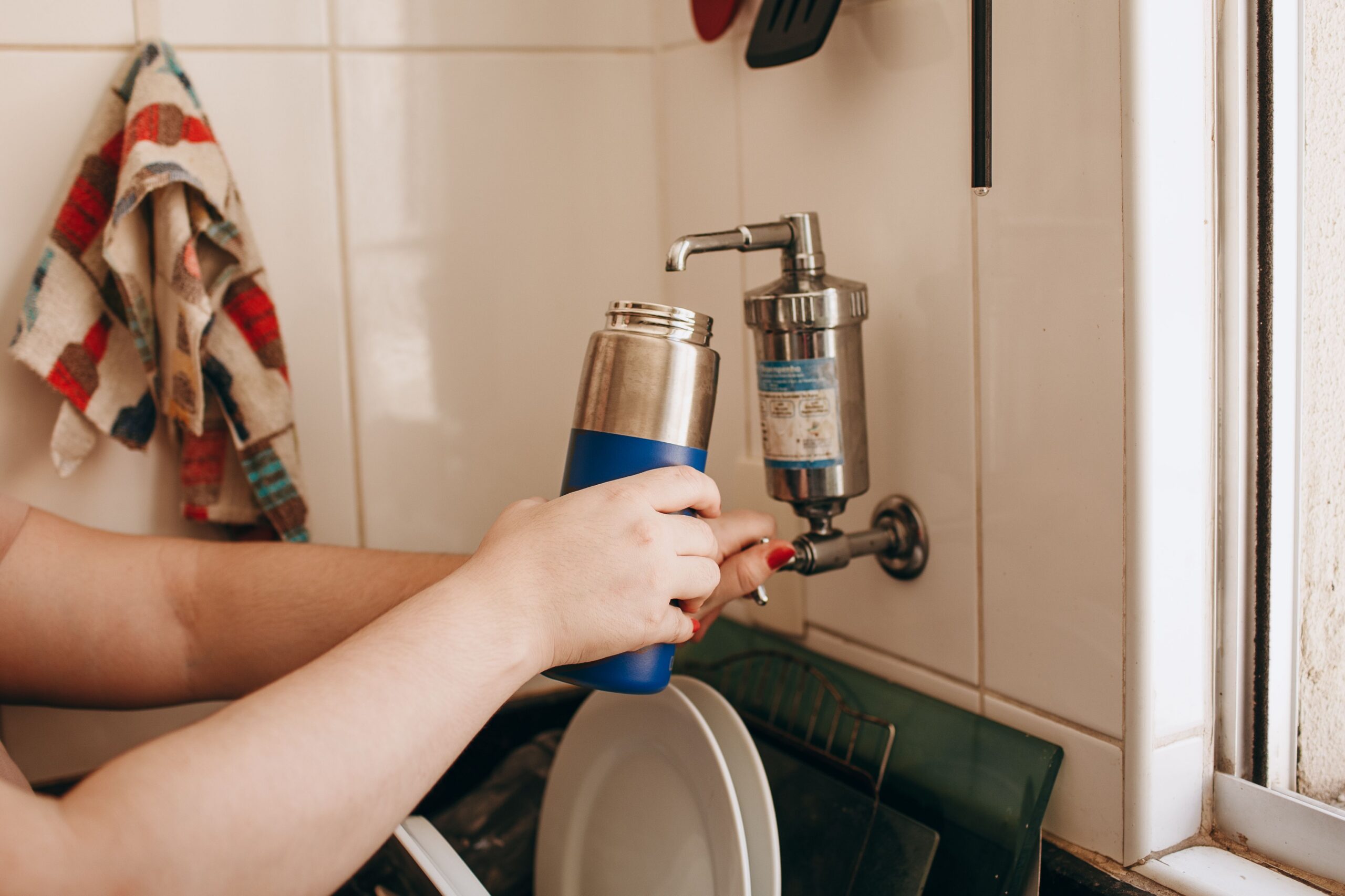
For example, they can install devices called reverse osmosis devices that will filter out the contaminants from the water at the point of entry or the point of use, and that’s a decision that they can be guided by somebody who’s an expert in the field. For most families, and I know that this goes beyond what you’ll see at the grocery store, but for most families, tap water is absolutely fine to drink.
The city water, as I said, is carefully regulated by the EPA, and so they have to notify customers if it exceeds any of the EPA standards for safe water. If they want to be doubly sure, and a lot of families are in this category, you can buy filters that are used at the tap called POU or point of use filters. I might also mention, Whitney Sterten-Hall, that if you do install devices like reverse osmosis devices or filters in your fridge or point of use filters, you’ve got to change them every so often.
You’ve got to follow the manufacturer’s recommendations because those filters will fill up with lead or with arsenic or any of the other contaminants, and when they’re full, they don’t work anymore. The contaminants will start seeping back into your drinking water, so you’ve got to regularly think of buying new filters and replacing the ones that are fully discharged.
Whitney Sterten-Hall: Thank you. That’s a good reminder to change my own filter at home. We do that too. What about at school? At my daughter’s preschool, I noticed they use big bottles of water to refill a kid’s water bottles, and I’m not sure if that’s because of old pipes or the tap water quality. What can schools do to ensure kids are getting access to safe drinking water? And then something I didn’t ask in the questions I sent you ahead of time, but I don’t fully understand it is I saw on the EPA website that the water quality can be affected because there’s longer breaks at schools or the weekends, so the tap’s not running, and I don’t fully understand why that would affect the water.
Dr. Alan Woolf: Yeah, those are all very relevant concerns, and you’ll see them as they’re walking to school. Kids are carrying the water bottles with them, and we want them to be well hydrated, and so it’s encouraged that they drink water at school with their meals or even between meals.
So where are they going to fill up those water bottles? They’re going to fill them up at bubblers or drinking fountains at the school, and in the case of an older school, those bubblers or drinking fountains may have lead in their pipes or lead in their solder, and that can pose a risk. So the EPA and states have come up with regulations on testing the water in schools that’s available for drinking to make sure that it’s safe, and you can’t just go up to a bubbler and put a sample of water in a jar or a baggie and send it off to test for lead. There’s a certain procedure that’s mandatory that you have to do in terms of making sure that the test is accurate in revealing any lead in the water,and if they find an elevated level of lead in that bubblers or that drinking fountains water, they either have to replace it or they have to shut it down and send kids somewhere else to fill up their bottles.
So that’s why some schools that either they’re drinking water, their fountains are contaminated, or they don’t want to test, they’ll provide bottled water, which they know is safe and doesn’t have lead in it for the kids to fill up their bottles. One thing I might mention, and has come up occasionally in the Region 1 PESHU, is schools calling about students who are filling up their water bottle from a tap in the bathroom of the school or a tap in the chemistry lab in the school, and is that okay? And it’s probably not okay. Those water sources aren’t necessarily tested to make sure that they’re potable, that the water in them is clean enough that you should be using it for drinking water.
So using the water from a chemistry lab tap to fill up your water bottle is probably not the best idea. What they’re concerned about with schools is summer vacation. Or other times when the school is closed down and the kids aren’t there.
Because the water that’s in the pipes is left in the pipes. It’s not running. So if there’s lead solder or lead pipes in the school, then the lead has a longer duration of time in which to leach into the water and make that water more concentrated with lead than it was before.
So one of the keys to reducing lead in water, and this applies at home too, is to run the tap water for the first five minutes each morning to get the lead out of the pipes so it hasn’t leached into the water overnight from the pipes. And it’s a particular problem in school when people aren’t using the water for days or weeks or even months at a time. Interesting.
Whitney Sterten-Hall: Okay, thanks for explaining that. Well, we’re recording this during a hot time of year and our year of record heat. What are some things to be aware of about water quality when kids are swimming and naturally occurring bodies of water? So lakes, rivers, oceans?
Dr. Alan Woolf: I know. And we’ve just heard on the news that they’re having a record heat for this time of year in France and England and other locales. They’re seeing temperatures that they haven’t seen before. So excessive heat is a real problem.
And so it’s natural that families want their kids to cool off and going swimming is a great way to do that. But as pediatricians will continue to remind them to keep their kids safe when they’re doing it, make sure that they know how to swim, if they’re going into a pond or a lake, or that there are lifeguards there to ensure that everybody is swimming safely. They should ensure that their kids have skin protection against the sun, sunscreen, and things like that.
And they should be aware of local advisories. If there are too much of an algae bloom in a lake or a pond, that can itself pose a health threat. And sometimes ponds will be closed or lakes will be closed by local officials.
And beaches may be closed if there are contaminants, algae or other bacteria or other contaminants that prevent kids from swimming safely.
Whitney Sterten-Hall: Okay, great. Thank you. Well, you have a lot of history with PEHSU, like you talked about since 1998. And then you’ve been a pediatrician for a long time now. Is there a standout lesson you’ve learned or a key impactful moment you’ve had that comes to mind working on children’s health and the environment?
Dr. Alan Woolf: Oh, there are a lot of them. And yeah, I’ve kind of grown up professionally with the PEHSU program. And I point out, you know, this wasn’t my idea in 1998. It was the idea of the two federal agencies, initially the ATSDR, and then adding on the EPA as a partner that started this grant program, so that there are PEHSUs around the country. This started, as I said, in 1998, there were about three of us, three regions who were first funded and approved. And over the next five years into the 1990s, that grew to 10 or 11 PEHSUs around the country.
And at least some federal initiatives like this may be funded for a few years and then the funding lapses or they go away for whatever reason. But the fact that PEHSUs have been around for 28 years speaks to something about their staying power, Whitney Sterten-Hall, and about the value that everybody appreciates from having health professionals involved with children and their families and public health officials and communities all working to improve the child’s environment so that they can have a healthy life. So if there’s one lesson I’ve learned over the years in my work in PEHSU, it’s that no man or woman is an island.
That environmental health is a team sport. You need to listen to the communities. You need to listen to families.
It’s not only health professionals that need to be involved, although we of course do need to be involved, but it’s also our colleagues in public health, our partners at the local, state, and federal level, private industry who we may work with to improve industrial practices and elected officials, representatives at the community, state, and federal level. All of these and all of us work together in partnership to help children’s health and their families. That’s the lesson I’ve learned. It’s a team sport.
Whitney Sterten-Hall: Well, that’s a great message. Thank you. Well, if you could give a caregiver, parent, or a children’s health professional one piece of advice about children’s health and water quality or the environment, what would that be?
Dr. Alan Woolf: Well, I think families always need to be vigilant for what’s going on in their community and what’s going on in their household and in many different regards keeping their children safe. I’ve already mentioned one thing that I’m kind of on the soapbox about is health professionals asking families where they get their drinking water. And if the family says private wells, then to dig a little deeper and ask them when’s the last time they had the well tested, and if it’s been more than a year, then they need to test it right away.
There’s some other situations where they need to test their water if they’re on a private well. For example, if there’s a newborn in the house or if they’ve had a recent wildfire in the area or a flood from extreme weather, that may compromise their wells safety. If they have unexplained illness in the family or they’ve been notified by local officials that there’s been a problem with the groundwater in their area, those are other times when they need to test the well water to see whether it’s safe.
Whitney Sterten-Hall: Okay, thanks so much. My in-laws have a well and they’re in Monterey in California, so I’m going to share this interview with them after this because it’s very helpful.
Dr. Alan Woolf: I’m sure they’re all doing the right thing. That they’re well aware of what they need to do as a private well owner to keep it safe, and there’s some wonderful resources out there besides this podcast that they can turn to to get expert advice on how to care for their well. Great. Well, for people with more questions about children’s health and the environment in your region in New England, how do they get in contact with you all and what are some tools and resources available to the public that you would recommend or where can they find them? Yeah, generally across the country go to our website www.peshu.net and find the regional PEHSU that’s closest to you.
There are some excellent resources at the website, the national classroom, that anybody can find answers to the questions they may have about their children’s environmental health. If you are a private well owner, and this is for your family in California as well as everybody else, Whitney Sterten-Hall, there are some wonderful resources and guidance for private well owners that are available at the state level in most states, including California, Minnesota, Massachusetts, and others that provide guidance. The EPA and the ATSDR also have websites that have sections devoted to private well remediation and private well ownership.
Also, it’s called the Private Well Classroom and they are run by the University of Illinois in Urbana. They do podcasts called Tap Talk and they sponsor a lot of classes that are often free. So if you go to the Private Well Classroom or the Private Well Class at the University of Illinois website, you can find a lot of resources there that will help you if you’re a private well owner.
Whitney Sterten-Hall: That’s great. Thank you. I’ll put links to our website too in the water quality pages as well as the Region One page in the notes of this podcast so people can have it. But thank you so much, Dr. Woolf, for being on the podcast. I learned so much and thank you for all the work you do and have done for so many years to keep kids and families safe from environmental hazards.
Dr. Alan Woolf: Well, we are always striving to do better. There are still many issues, many threats to children’s health that we think can be improved in their environment and so we’re all working together as a team to try to accomplish that. But one of the ways is to keep people informed. So podcasts like this really help the public, help professionals, public health officials, and others who are interested in these topics.
So thank you for inviting me again.
Whitney Sterten-Hall: Well, thank you. All right. And yeah, I hope to have you back another time too. I know that you work on so many different topics, so really appreciate it.
Dr. Alan Woolf: It’d be a pleasure any time, any time you want.