Prescriptions for Prevention

prescriptions for prevention

How and where we live, eat, sleep, work, and play, has huge impacts on our health. These factors have especially large impacts during pregnancy and in early child years, but continue to be vital throughout our lives. Prescriptions for Prevention guide parents and caregivers in the best actions to protect children’s environmental health and prevent future harm. These materials are based off of our clinician-facing Pediatric Environmental Health Toolkit (PEHT), featuring evidence-based overviews. Toxin or Exposure includes toxic chemicals like lead and mercury. Sources are where this toxin or exposure may come from, like our food or water.

Use the filters below to search for prescriptions by category such as health issue, toxin/exposure, region etc. Regions 1, 2, 4 and 9 all contribute to the Prescriptions for Prevention program.

Scroll down further for Region 9/WSPEHSU’s animated video series.

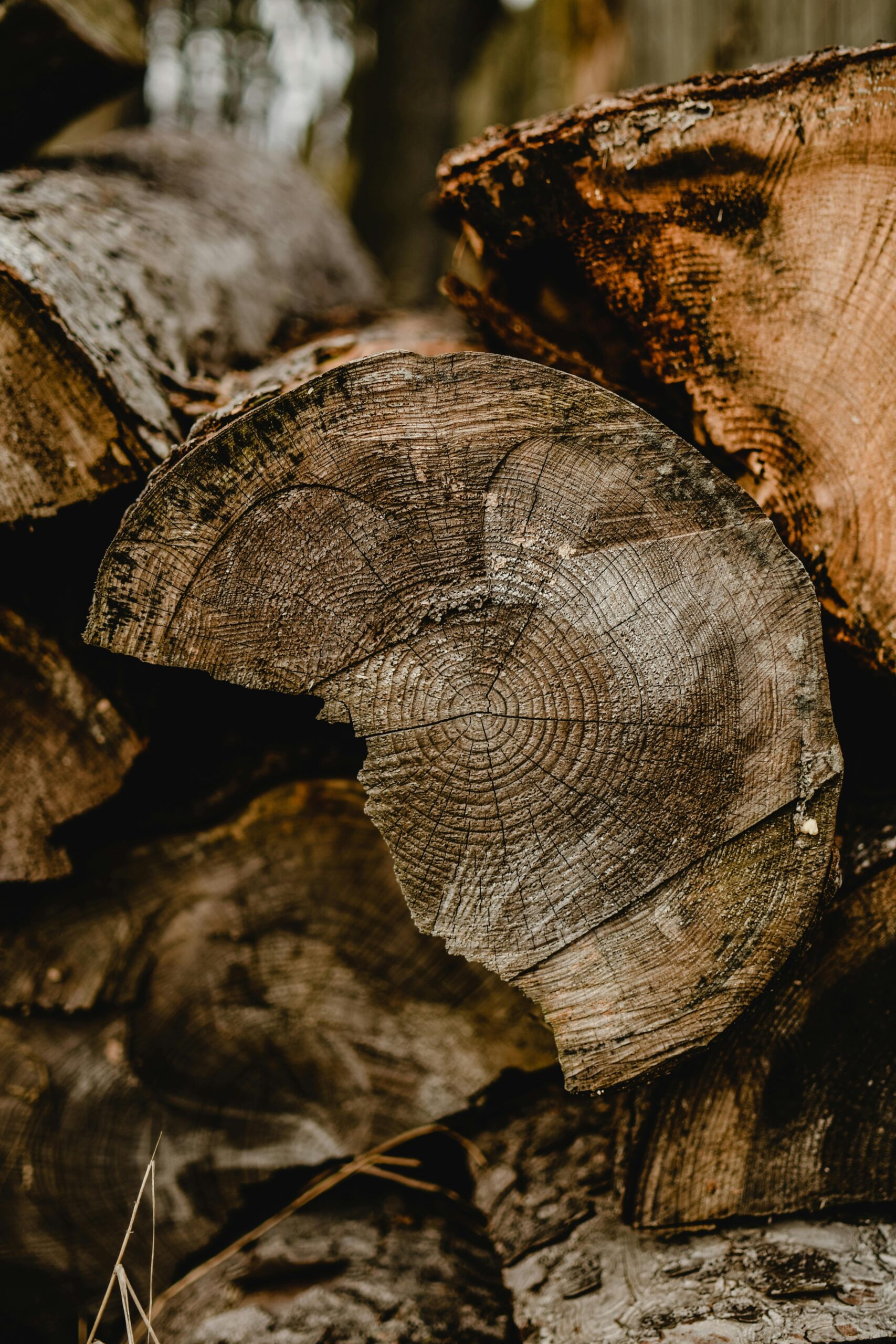
Smoke from Wood-Burning

Smoke created by burning wood contains gases and particles that can harm your health when you breathe them.

Region 2
Air Quality| Extreme Weather

Tenant Rights: Home Heat

Space heaters cause an average of 1,700 fires and 80 deaths each year. If you are using a space heater for extra heat, it is important to use it sa…

Region 2
Extreme Weather
space heater safety

Space Heater Safety

Space heaters cause an average of 1,700 fires and 80 deaths each year. If you are using a space heater for extra heat, it is important to use it sa…

Region 2
Extreme Weather

Cold Weather Safety

Outdoor winter play can be healthy and fun. Learn how to keep your family safe outdoors in cold weather.

Region 2
Extreme Weather

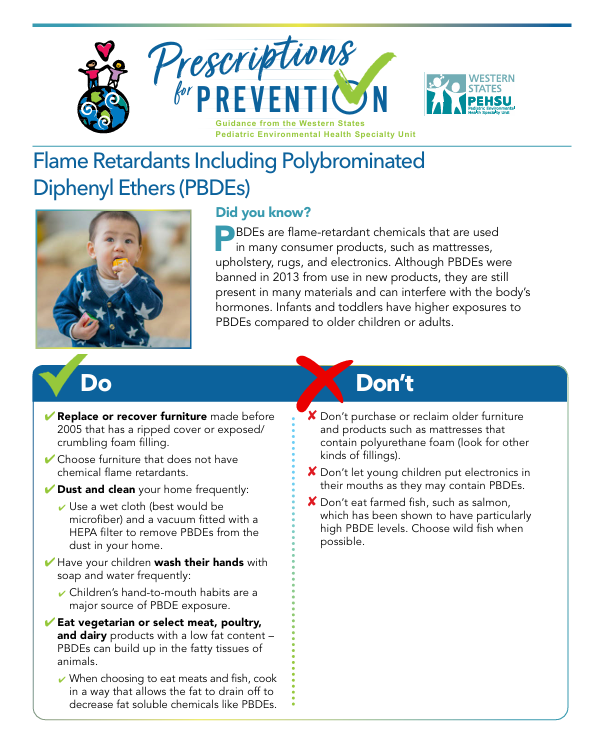
Flame Retardants Including Polybrominated Diphenyl Ethers (PBDEs)

This factsheet examines the use of PBDEs as flame retardants, their potential health impacts, and tips to reduce exposure in homes and workplaces.

National PEHSURegion 9
Healthy Homes

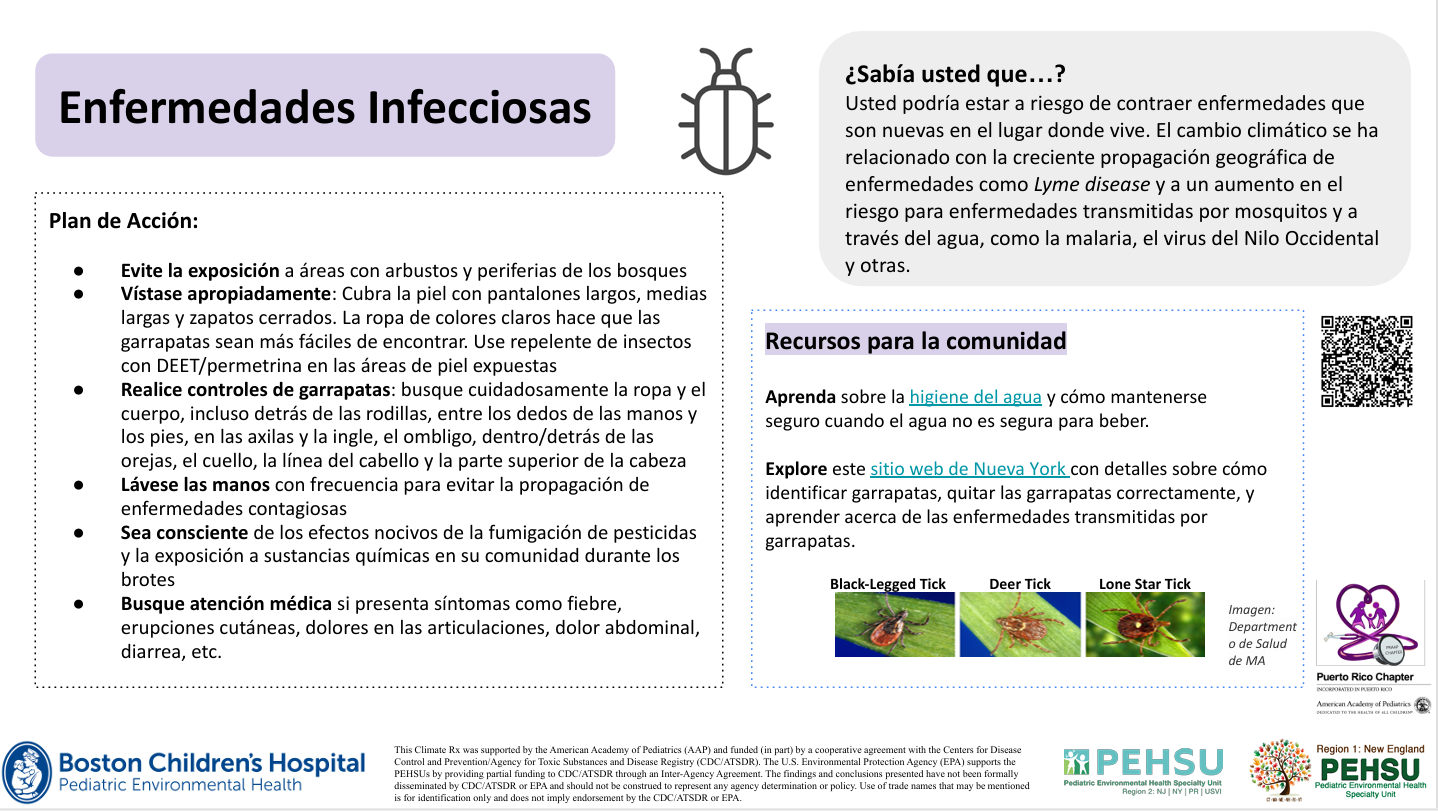
Enfermedades Infecciosas

Usted podría estar a riesgo de contraer enfermedades que son nuevas en el lugar donde vive. El cambio climático se ha relacionado con la creciente …

Region 1
Extreme Weather

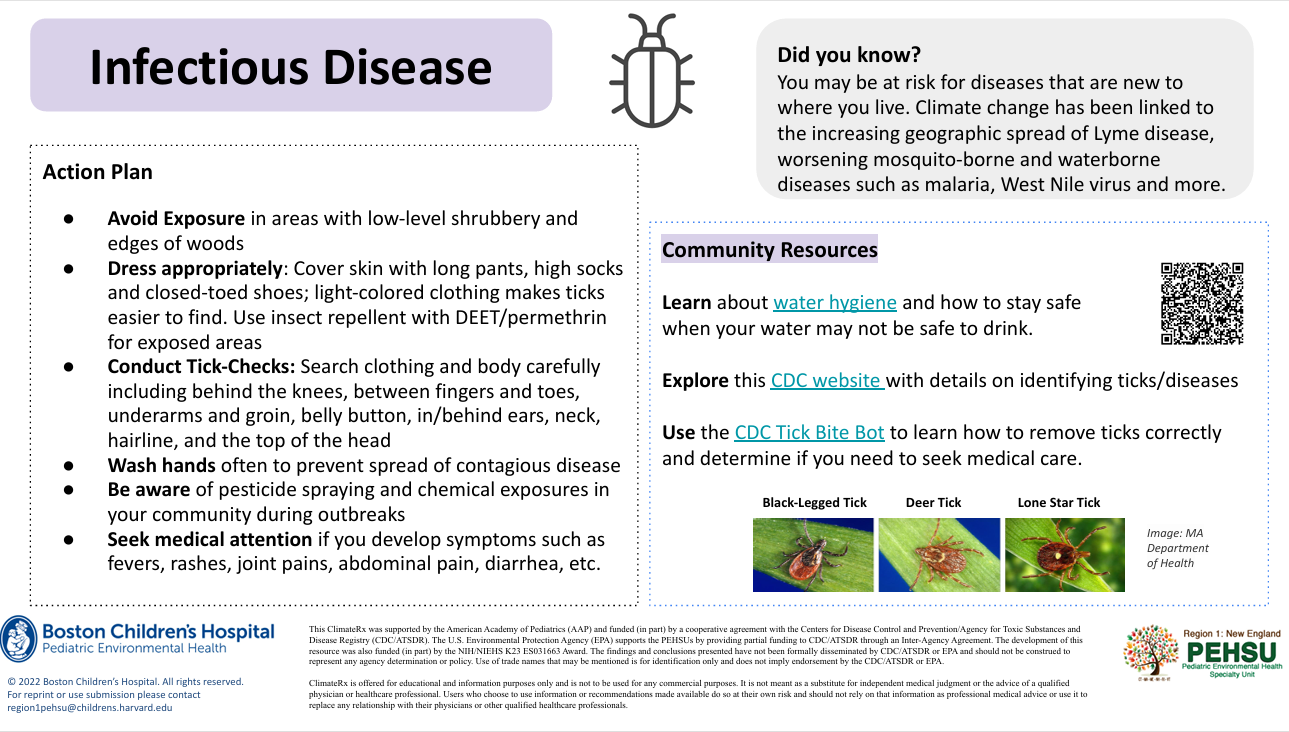
Infectious Disease

You may be at risk for diseases that are new to where you live. Climate change has been linked to the increasing geographic spread of Lyme disease,…

Region 1
Extreme Weather

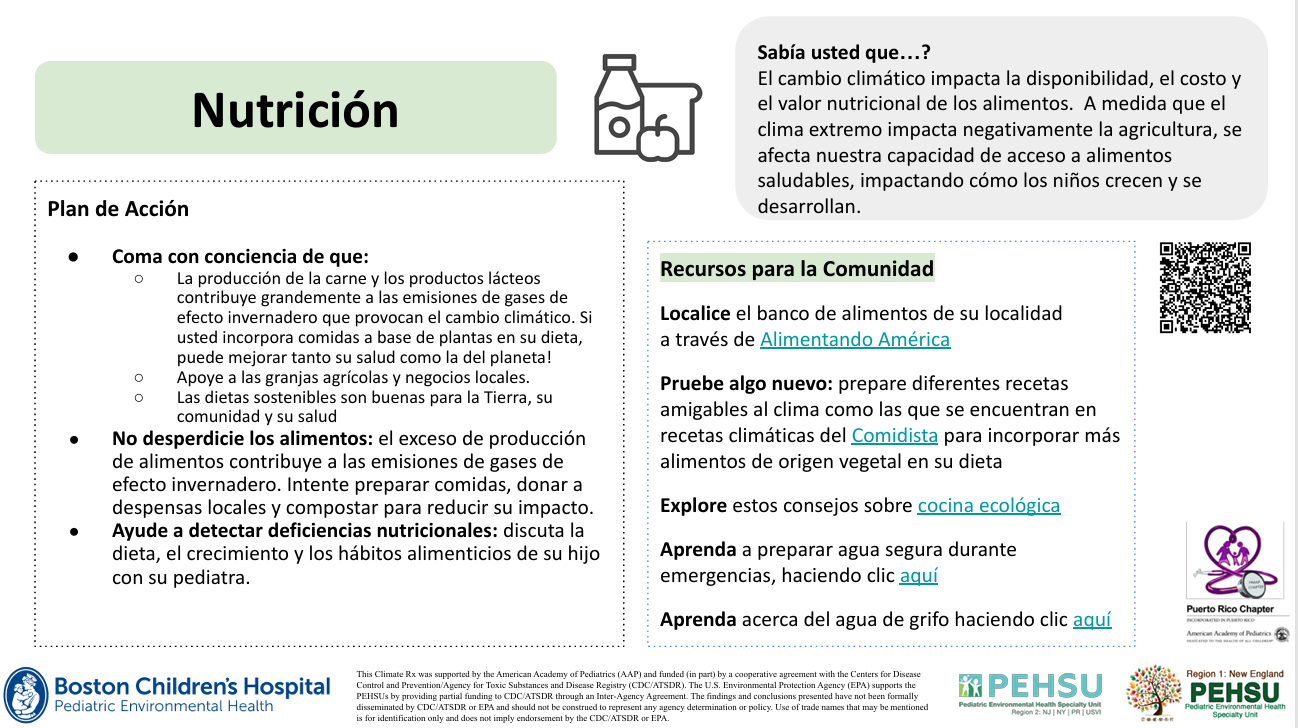
Nutrición

A medida que el clima extremo impacta negativamente la agricultura, se afecta nuestra capacidad de acceso a alimentos saludables, impactando cómo l…

Region 1
Extreme Weather

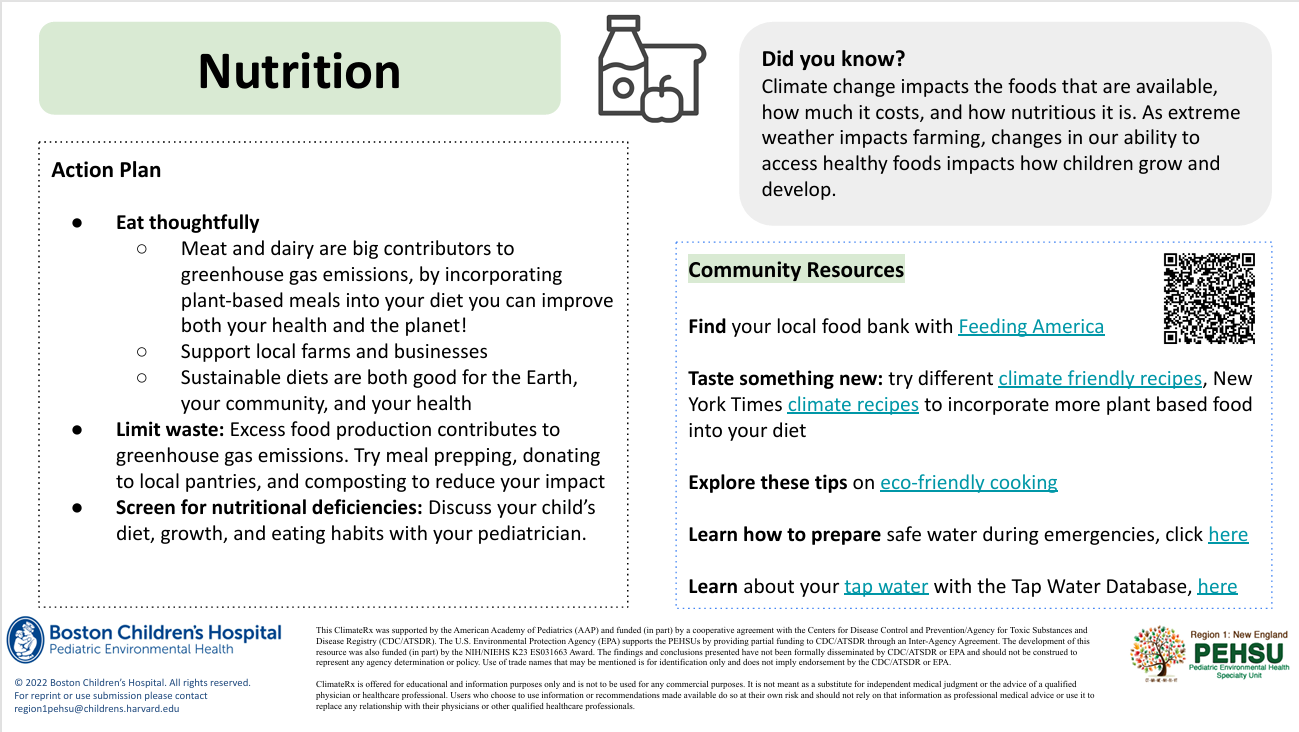
Nutrition

As extreme weather impacts farming, changes in our ability to access healthy foods impacts how children grow and develop.

Region 1
Extreme Weather

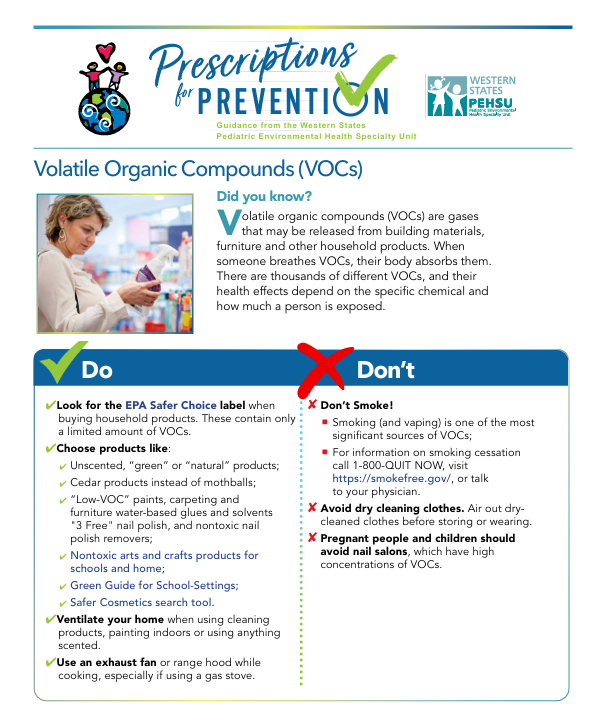
Volatile Organic Compounds (VOCs)

This factsheet highlights the sources of VOCs, their health effects, and strategies to improve indoor air quality by reducing VOC exposure.

National PEHSURegion 9
Healthy Homes| Healthy Schools

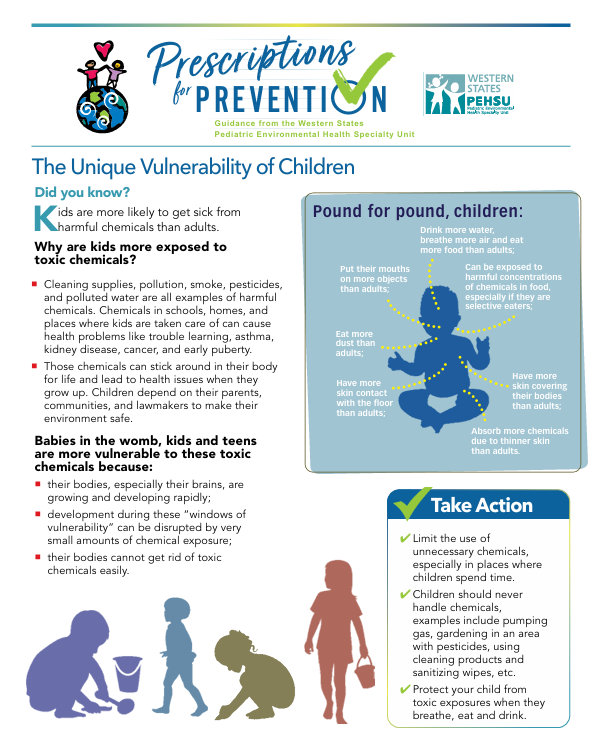
The Unique Vulnerability of Children

This document explores why children are more susceptible to environmental hazards due to their developing systems and behaviors, offering guideline…

National PEHSURegion 9
Healthy Homes| Healthy Schools

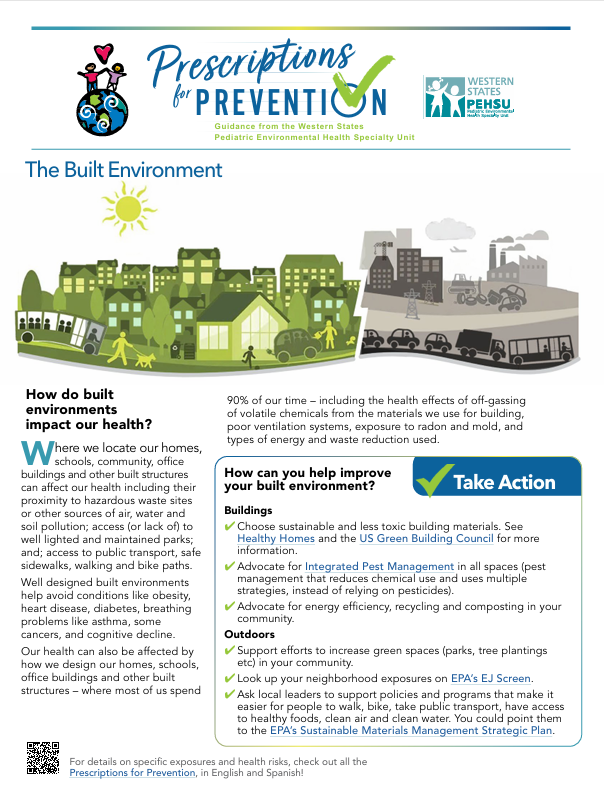
The Built Environment

This resource explores how urban planning and the built environment impact health, emphasizing the importance of access to green spaces, clean air,…

National PEHSURegion 9
Healthy Homes| Healthy Schools

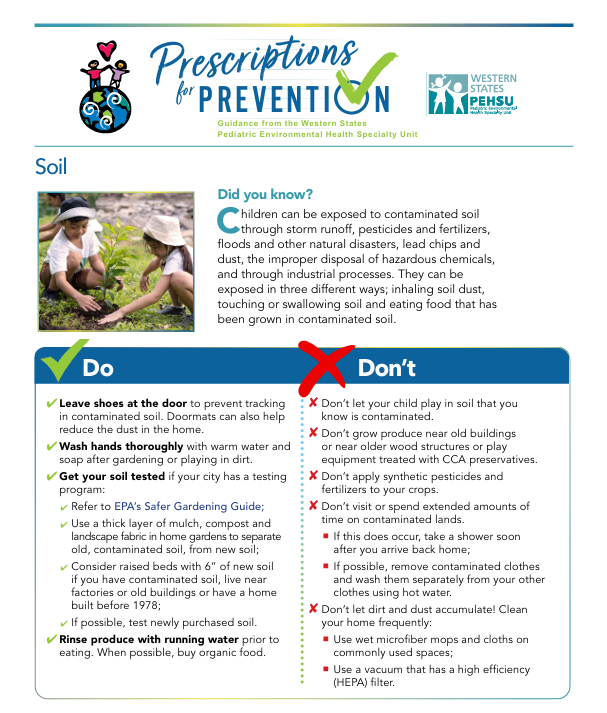
Soil

This document addresses health risks from contaminated soil, especially for children and gardeners, and offers tips for safe gardening practices.

National PEHSURegion 9
Food Safety| Healthy Homes| Healthy Schools

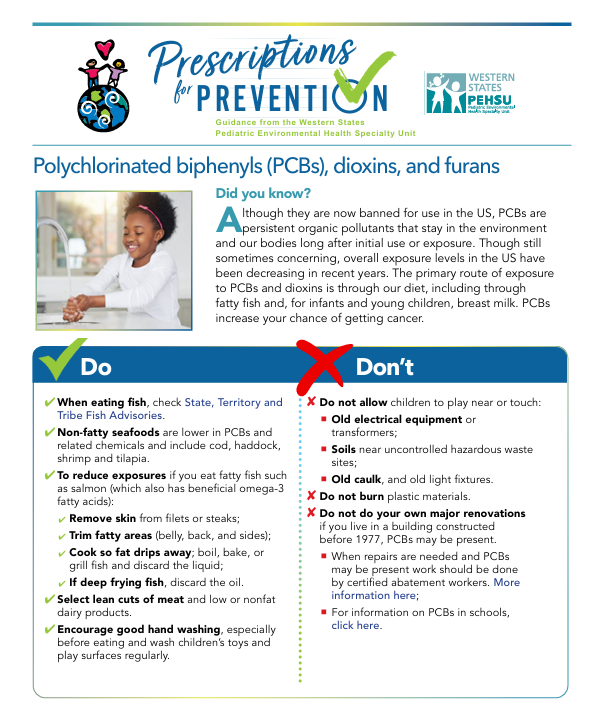
Polychlorinated biphenyls (PCBs), dioxins, and furans

This document covers the history, health risks, and current issues related to PCBs, advising on strategies to avoid exposure.

National PEHSURegion 9
Healthy Homes| Healthy Schools

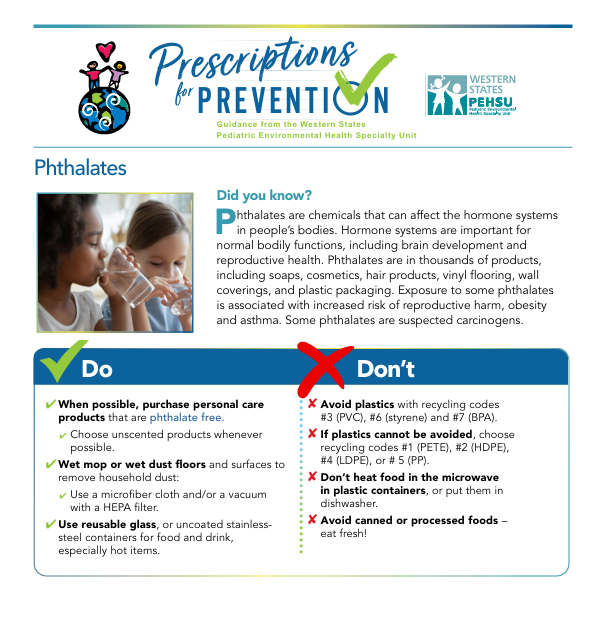
Pthalates

This factsheet outlines the sources and health risks of phthalates, commonly found in plastics and personal care products, and provides recommendat…

National PEHSURegion 9
Healthy Homes| Healthy Schools

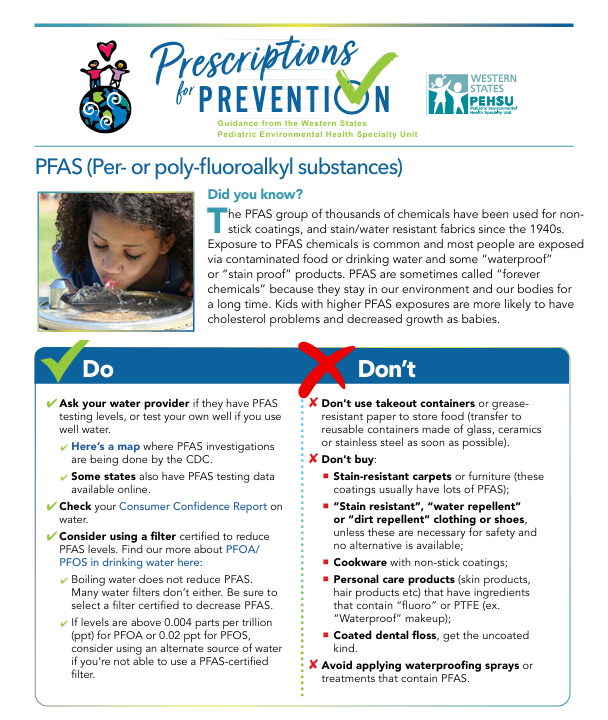
PFAS

This document highlights the widespread use of PFAS chemicals, their persistence in the environment, and health concerns, with advice on minimizing…

National PEHSURegion 9
Healthy Homes| Healthy Schools| Water Quality

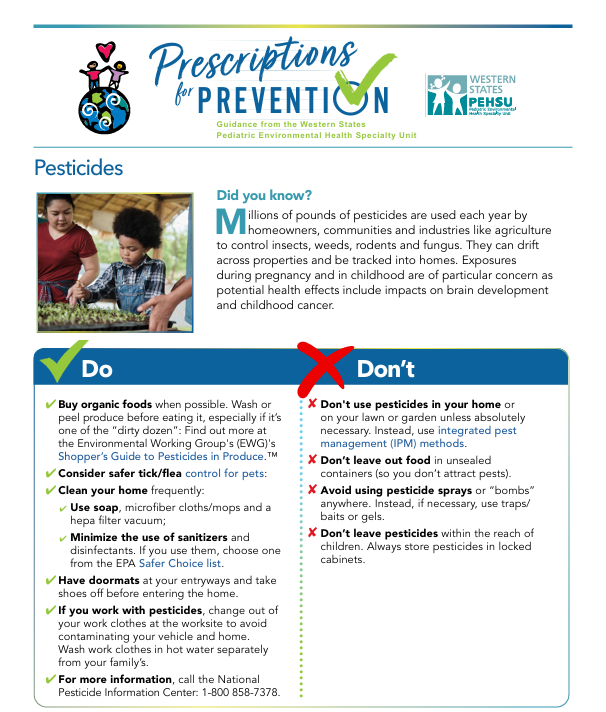
Pesticides

This factsheet discusses the health risks of pesticide exposure, particularly for children, and offers tips for reducing exposure in homes, gardens…

National PEHSURegion 9
Healthy Homes

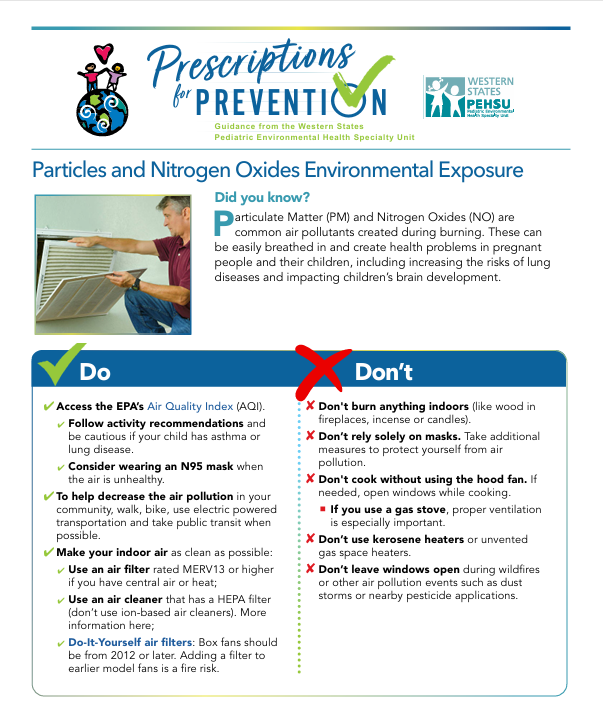
Particles and Nitrogen Oxides Environmental Exposure

This factsheet discusses the dangers of particulate matter in air pollution, its effects on respiratory and cardiovascular health, and ways to miti…

National PEHSURegion 9
Air Quality

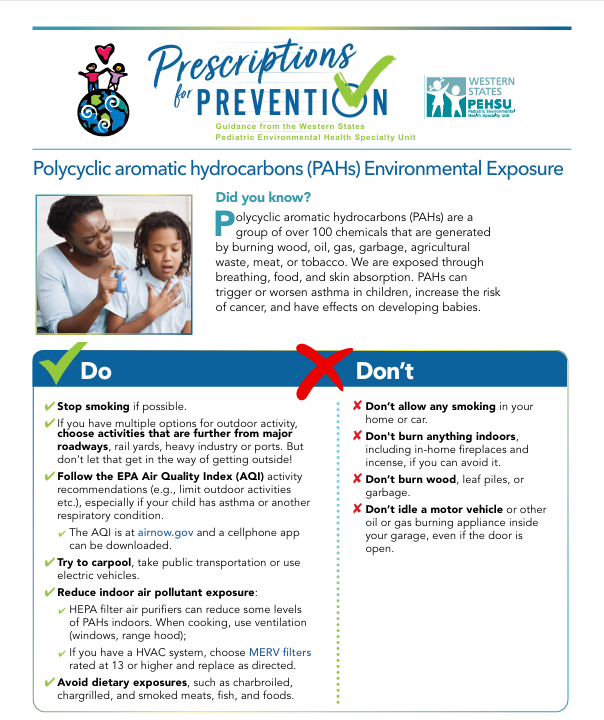
PAHs Polyaromatic Hydrocarbons

This document details the sources and health effects of PAHs, chemicals released during combustion, and suggests measures to limit contact.

National PEHSURegion 9
Healthy Homes| Healthy Schools

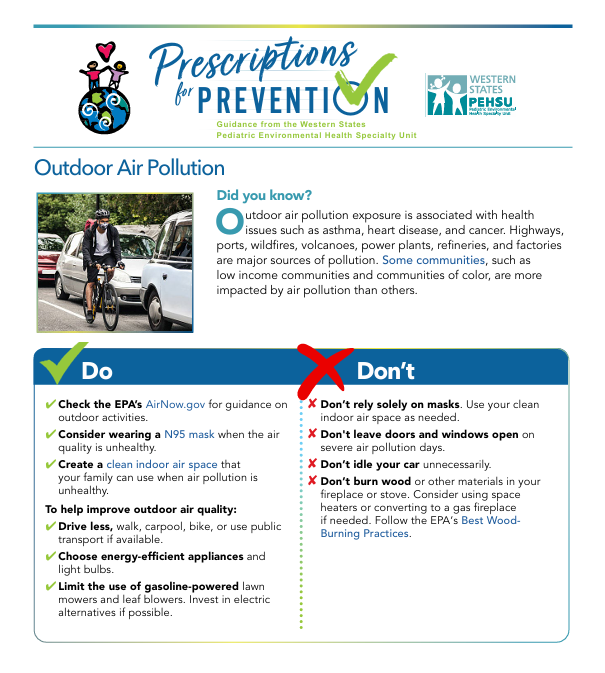
Outdoor Air Pollution

This factsheet focuses on pollutants affecting outdoor air quality, their health impacts, and actions individuals and communities can take to reduc…

National PEHSURegion 9
Air Quality

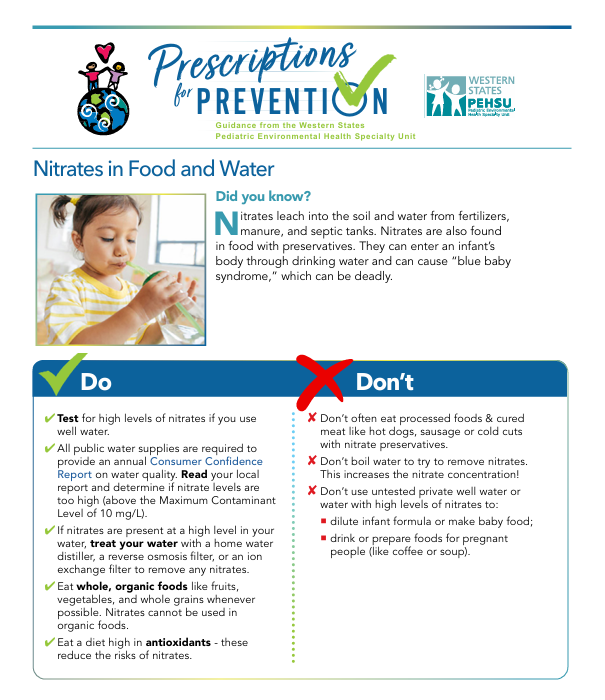
Nitrates in Food and Water

This document outlines the risks of nitrate contamination in food and water, especially for infants, and provides steps for testing and reducing ex…

National PEHSURegion 9
Healthy Homes| Healthy Schools| Water Quality

Mold

This document discusses the health impacts of mold exposure in homes and provides tips for identifying, removing, and preventing mold growth.

National PEHSURegion 9
Healthy Homes| Healthy Schools| Mold

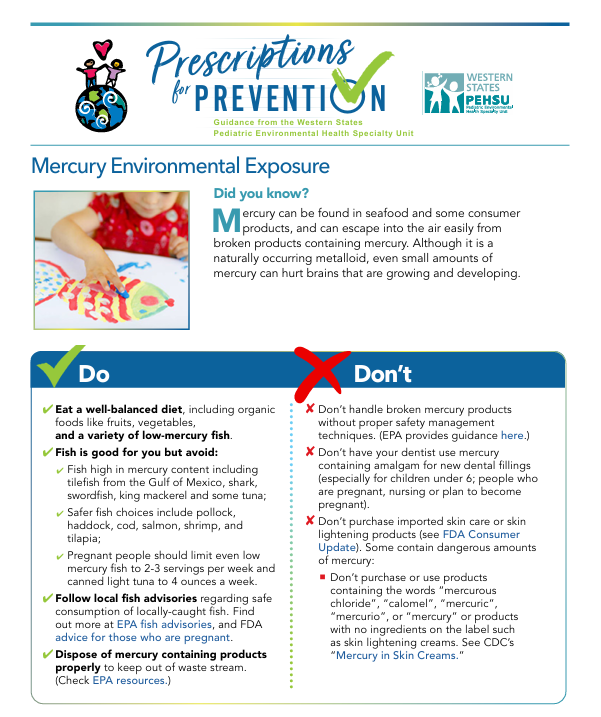
Mercury

Mercury can be found in seafood and some consumer products, and can escape into the air easily from broken products containing mercury. Although it…

National PEHSURegion 9
Healthy Homes| Healthy Schools

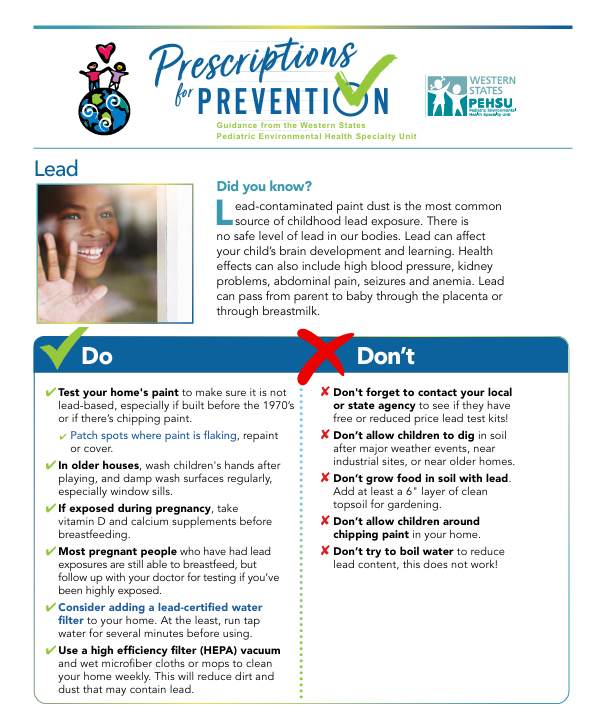
Lead

This document provides comprehensive information on the sources of lead exposure, its health effects, and strategies for prevention, emphasizing th…

National PEHSURegion 9
Healthy Homes| Healthy Schools| Lead

Videos:


Region 9 (WSPEHSU) Prescriptions for Prevention were developed in partnership with:

This project was led by: James Earl Schier Nolan, MPH (WS PEHSU and EaRTH Center), Stephanie Holm, MD, PhD, MPH, Mark Miller, MD, MPH and Maria Valenti. Graphic design by Steve Burdick.

Contributors and subject authors include: Content contributors include: Anthony Lopez, Bryan Ramirez, Elizabeth Cheung, Erica Chung, Hannah El-SabroutIgnacio “Nacho” Santana, Jose Maldonado, Kali Sullivan, Keo Chui, Madeleine Ambrose, Natasha Gonzalez, Nathaniel Tsiperfal, Rachana Mudipalli, Sonja Swenson, Valerie Gallardo, and Zoë Gilbard.

Project supported by: the American Academy of Pediatrics (AAP) and funded (in part) by the cooperative agreement award number 5 NU61TS000296-02-00 from the Agency for Toxic Substances and Disease Registry (ATSDR). Acknowledgement: The U.S. Environmental Protection Agency (EPA) supports the PEHSU by providing partial funding to ATSDR under Inter-Agency Agreement number DW-75-95877701. Neither EPA nor ATSDR endorse the purchase of any commercial products or services mentioned in PEHSU publications.