
Understanding leukemia in children– an interview with Dr Joseph Wiemels
November 25, 2025 — Oakland, Calif: Childhood leukemia is the most common form of cancer in children, affecting an estimated 3,800 children each year.* Behind every statistic is a child, a family, and a story of resilience. Thanks to tireless researchers, survival rates have improved dramatically over the past few decades. Still, the fight is far from over. In the lab, scientists like Joseph Leo Wiemels, PhD, work to uncover the inner workings of the disease in order to both help children who are sick, and help prevent more children from becoming sick.
*Boston Children’s Hospital, 2025
Dr. Wiemels is an epidemiologist and childhood leukemia researcher, with USC Keck School of Medicine, and a leading childhood cancer expert with PEHSU’s Childhood Cancer & the Environment Program. He is a preeminent figure in the study of leukemia and cancer epidemiology, and his work seeks to unravel how genetics, environment, and early-life exposures converge and lead to disease and illness.
As a professor at USC’s Keck School of Medicine working within the Center for Genetic Epidemiology, Dr. Wiemels leads large-scale, population-based investigations into childhood acute lymphoblastic leukemia (ALL) and related cancers. With roots in environmental health and toxicology – from his doctoral work at UC Berkeley to postdoctoral training in the United Kingdom – Dr. Wiemels brings a multidisciplinary lens to cancer research. Dr. Wiemels currently lives with his wife in California, where six children have flown the nest. Below, Rebecca Barry (Children’s Environmental Health Network), talks to Dr. Wiemels about children’s environmental health and his role in the field.
Why study childhood cancer?
Dr. Wiemels was first drawn to toxicology – as opposed to becoming a practicing doctor – based on the logic that if we could identify what exposures were making people unwell, we could prevent people from getting sick in the first place. This led to his work in oncology and eventually children’s health and leukemia, over the span of his career. “Cancer in children,” Joe remarked, “is particularly harrowing because they have the most life to lose. It also doesn’t really make sense; their bodies haven’t aged much and they have had, on the whole, significantly less exposure to environmental harms.”
“Cancer in children is particularly harrowing because they have the most life to lose.”
-Dr. Wiemels
At Children’s Environmental Health Network, we often talk about the importance of protecting children from harmful environmental exposures- air pollution, pesticides – primarily because it is these exposures that increase their risk of disease and illness, including cancers. Collectively, we strive to create healthy environments to reduce children’s risk as much as possible, but, as Dr. Wiemels points out, disease often arises from a complex interplay between genes and environment, “therefore, susceptibility and the impact of disease is, to some extent, uncontrollable.”
Dr. Wiemel’s work is based on trying to understand these processes in the hopes to prevent them. He describes his work as ‘forensic’- investigating the processes and mechanisms behind the damage and disease. His days, he tells me, are a mixture of wet and dry labs (experiments and research as well as computer based data analysis) alongside supervising his students and running workgroups. Dr. Wiemels feels that his work with his students is rewarding; while they learn from his oncology expertise, he can also learn from their new data and technological skills.
What does the science show about prevention?
When I asked Joe about his recent successes, his answer was heartwarming: “Everything feels like a victory, everything we learn. It’s such a wonder – we have the ability to touch the hands of God’s creation.” More specifically, he reflected on how even the smallest discoveries can prove absolutely monumental later down the line. “Some (findings and reports) feel inconsequential and end up buried in papers, but they can come up later and prove really valuable.” He explained it with an example about the immune system, alterations of which his studies have linked to increased risk of childhood leukemias. Years ago, he and other researchers found that babies born with low levels of a substance called interleukin-10 (IL-10) seemed more likely to develop leukemia later on. But scientists later discovered that a virus, called cytomegalovirus (CMV), might be the real culprit. This virus carries its own copy of the IL-10 gene, which can interfere with the body’s natural IL-10 and may raise the risk of leukemia. In other words, it’s not just about the baby’s immune system — infections can play a hidden role too.
Untangling these complex links between viruses, immunity, and cancer is like solving a puzzle, and it may one day lead to ways of preventing leukemia and other childhood cancers. Other examples include a link between vaginal births and lower rates of childhood leukemia compared to caesarean births, and research that shows children who attended day care facilities in early life show less instances of leukemia compared to those who are kept at home until elementary school. A theory behind this is that increased interaction with other children and environments (through daycare, for example) develops a more robust immune system in children, making them less susceptible to damaging effects from infection in later life. Increased exposure to a range of environments also expands their microbiome – which is the term for all of the microorganisms like the bacteria in the digestive system, or tiny organisms that live on our skin. A more developed microbiome in children is linked to less infection and disease.
It’s not just about the baby’s immune system — infections can play a hidden role too.
There are challenges in every area of work, and this type of research is no exception. One of the main difficulties that Dr. Wiemels and his team faces is the sheer time it takes to obtain funding, ethics approvals and the green light to go ahead with trials and studies. Because of the sensitive nature of his work – being centered around potentially lethal disease and children – these careful and painstaking procedures are necessary but can extend to years. There isn’t always a great deal of support and resources available, especially as public trust in public health has eroded in recent years.*
*Amitabha Palmer, Sara Gorman, Misinformation, trust, and health: The case for information environment as a major independent social determinant of health, Social Science & Medicine, Volume 381, 2025, 118272, ISSN 0277-9536, https://doi.org/10.1016/j.socscimed.2025.118272. https://www.sciencedirect.com/science/article/pii/S0277953625006033
What’s next in the field of childhood cancer?
Childhood cancer is multi-factorial in cause – it involves genetics, environment, and epigenetics – but with new technology and wider studies, Dr. Wiemels is hopeful that these research approaches can come together. Specifically, researchers could map environmental exposure, geographical locations, and genetic history to predict which populations are most at risk of becoming sick. Then, they can provide personalized, actionable advice to families to reduce children’s cancer risk. This type of cohesive work- using data analysis, genetic analysis, environmental monitoring and research translation- could prevent many cases of childhood cancer.
In order to make these advances, Dr. Wiemels believes that education plays a huge role in attaining the resources and support needed for research. People need to understand the value of research in society- or as Dr. Wiemels puts it: “Support in science starts with comfort and knowledge of what science can do.” Knowledge gained from studies and research can lead to successful health interventions, which can help prevent suffering from illness and disease. Part of this process is ensuring that reputable sources continue to promote accurate information, and that health research translation and communication is accessible. The PEHSU’s Childhood Cancer & Environment Program, along with partners such as the Children’s Environmental Health Network, strive to fulfill this need. Support for science is crucial, especially when children’s health and wellbeing is on the line.
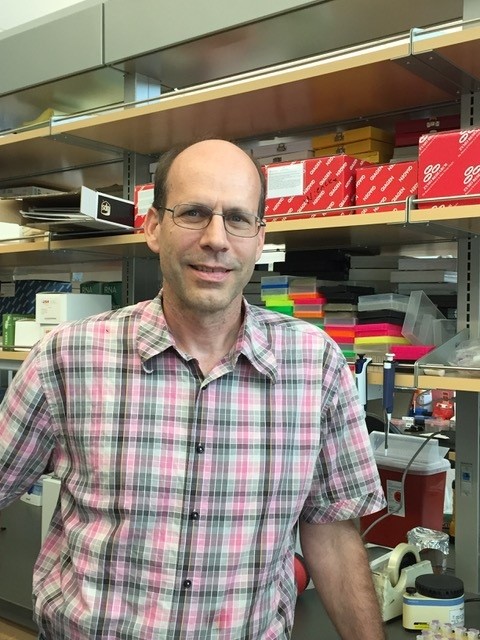
“Support in science starts with comfort and knowledge of what science can do.”
-Dr. Wiemels
Photo: Dr. Wiemels in the lab.
More resources from Dr. Wiemels:
View Dr. Wiemel’s videos on childhood leukemia and the immune system and folate and reduce risk of childhood cancer::
View Dr. Wiemel’s recent publications:
- Molecular reactivity in maternal pregnancy blood and neonatal dried blood spots is associated with risk of pediatric acute lymphoblastic leukemia. Cancer Epidemiol Biomarkers Prev. 2025 Sep 11.. View in PubMed
- Predictors of LexisNexis residential history availability and registry data concordance for childhood cancer research. JNCI Cancer Spectr. 2025 Sep 01; 9(5).. View in PubMed
About Joseph Leo Wiemels, PhD
Dr. Wiemels is a professor in the Center for Genetic Epidemiology at USC studying the molecular epidemiology of childhood cancers, particularly childhood leukemia and brain cancer. His work concentrates on etiology and prevention, incorporating concepts of genetic susceptibility and interaction with environmental exposures and infections. His research group is focused on the interaction of inherited genetics and environmental factors to cause specific mutational and epigenetic changes, and the specific timing of these events during the development of the child. Dr. Wiemels is currently an Associate Director of the Norris Comprehensive Cancer Center (NCCC) at USC.
Author: Rebecca Barry, MSc, Children’s Environmental Health Network
Editorial Review by the PEHSU National Program Office and the Childhood Cancer & the Environment Program