Featuring Dr. Abby Mutic & Dr. Susan Buchanan
What can you do to protect your health and your baby’s health in utero from environmental hazards? How can you support a pregnant loved one to stay safe and healthy during pregnancy?
In this podcast episode, we talk about how to have a healthy pregnancy with Dr. Abby Mutic (Director of the Southeast (Region 4) PEHSU) and Dr. Susan Buchanan (Director of the Great Lakes Center for Children’s and Reproductive Environmental Health (Region 5 PEHSU). They discuss environmental hazards like chemicals in cleaning products and VOCs in furniture, what to consider when painting a nursery, myths about the placenta, and more.
Dr. Mutic is a certified nurse midwife by training, who became interested in the environment and how it affects pregnancy in children’s health while she was working as a midwife in rural Missouri. Dr. Buchanan is originally a family physician performing OB, who gained additional training in occupational environmental medicine after becoming interested in how the workplace environment affects health.
Listen Here
Play the podcast in the web player below.

It’s also available on Spotify and iTunes. View the transcript at bottom of the page.
Resources
- Southeast Pediatric Environmental Health Specialty Unit (SE PEHSU)
- Great Lakes Center for Children’s and Reproductive Environmental Health
- Find Your PEHSU Expert
Other Resources
Cosmetics, Clothing & Furniture:
- Skin Deep
- Global Organic Textile Standards Certified Suppliers Database (US)
- OEKO-TEX® Standard 100 Shopping Directory
- UCSF Toxic Matters
Air Quality:
About Dr. Abby Mutic & Dr. Susan Buchanan
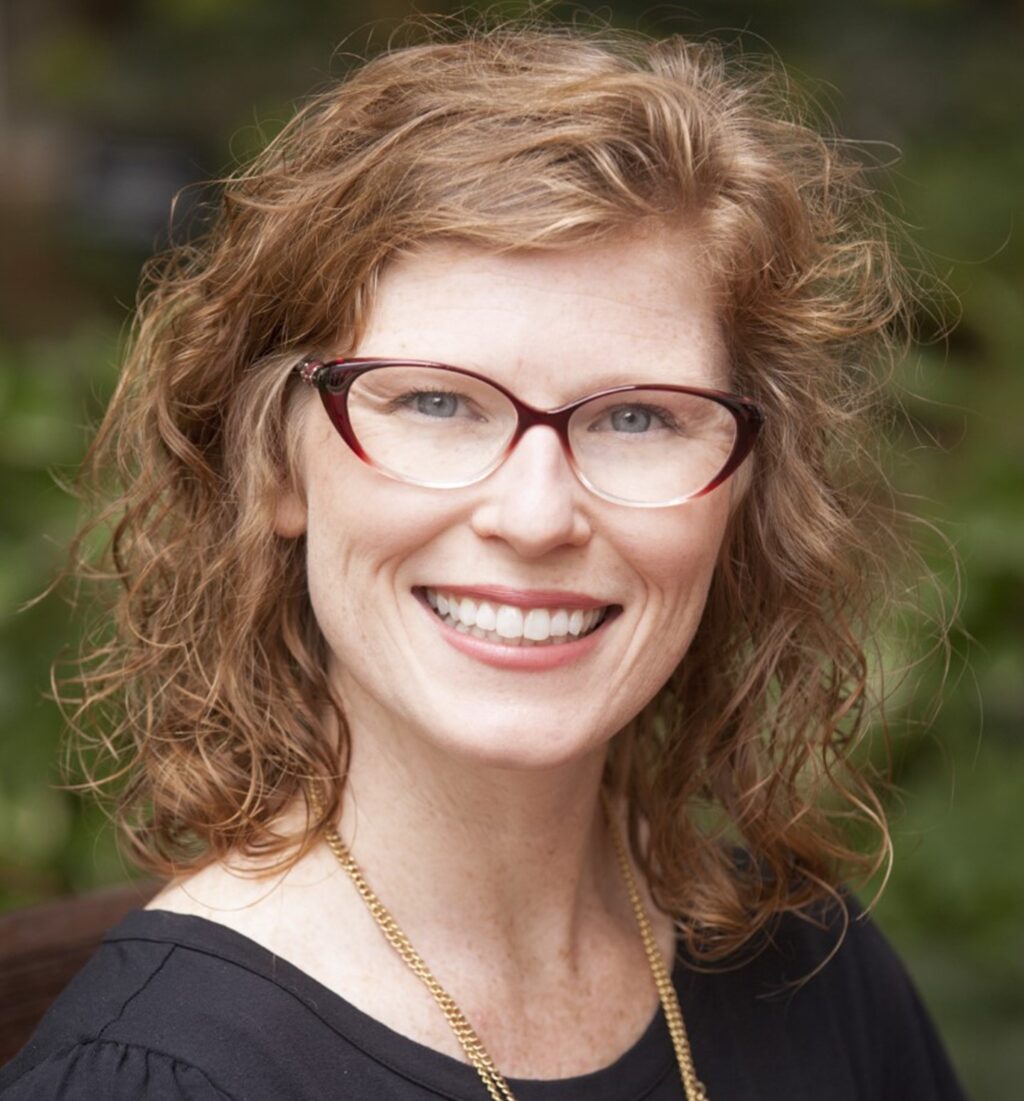
Abby Mutic, PhD, CNM, is an Assistant Professor from Emory University School of Nursing, a Certified Nurse Midwife, and the Director of the Southeast Pediatric Environmental Health Specialty Unit (SE PEHSU). Her expertise is in environmental exposures and respiratory health among women and children. She oversees multiple community outreach projects in the Southeast and consults with exposed communities and healthcare providers experiencing large and small environmental hazards. Dr. Mutic is a mindful researcher, employing continuous community guidance for research development, interpretation, and educational report-back.
Susan Buchanan, MD, MPH, is the Director of the Great Lakes Center for Children’s and Reproductive Environmental Health and a clinical associate professor of environmental and occupational health sciences at the UIC School of Public Health. Buchanan is an expert in health problems related to toxic substances and other environmental hazards in the workplace or community. Her research interests include the health of minority, low-income, and immigrant workers; of children; and reproductive environmental health. She has published studies on the impact of fish consumption and mercury exposure in the Asian communities in Chicago; the use of protective gear among Latino day-laborers; and lead exposure among Chicago’s children.
Transcript
[Whitney Sterten-Hall] Today, I’m talking to two PEHSU experts, Dr. Susan Buchanan and Dr. Abby Mutic. Let’s start with introductions. What are your current roles with PEHSU and how long have you worked there?
[Dr. Buchanan] Hi, yeah, I’m really happy to be here. I’m Susan Buchanan, and I direct the Region 5 PEHSU, Pediatric Environmental Health Specialty Unit. I’ve been doing that for about the last 15 years.
[Dr. Mutic] And I’m Dr. Abby Mutic. I also am the director of the Pediatric Environmental Health Specialty Unit for the Southeast Region. It’s known as Region 4 of the United States. And I’ve been doing this for about 8 years.
[Whitney Sterten-Hall] Great. Well, thank you so much for being here. Before we get into talking more about healthy pregnancy and environmental health, what sparked your initial interest in environmental health and pediatrics, and Abby, maybe we can start with you.
[Dr. Mutic] Sure. I am a certified nurse midwife by training, and I started to become very interested in the environment and how it affects pregnancy in children’s health when I was initially working as a midwife in rural Missouri. I took care of women of childbearing age that had careers, or even maybe they would call it just employment at certain locations across rural Missouri where there were a lot of industrial plants, some super fund sites or near super fund sites, other just random exposures from the type of materials that they worked with in large manufacturing companies. And they came to me during pregnancy or elsewhere and asked about these exposures and how it could be affecting their health.
Maybe things that they had been noticing about their health or just general curiosity about these exposures and what it could do to their developing baby. And to be honest, we don’t get trained in this type of expert expertise. And so I didn’t have a lot of answers for them that I felt good about.
And that became a way for me to start learning more and looking things up and just became fascinated with this gap that we find across healthcare providers and academic professionals that are doing research in this area. So, thus, I came to Emory to get my PhD because I wanted to study in this specific area and fast forward, you know, a few years later, I was doing research with Dean McCully down in South Florida with farm workers and learning about whether changes and how, you know, extreme heat and disasters can affect farm workers and farm worker health and abilities to become pregnant, that kind of stuff and just became more and more interested in an environment.
Now I’ve kind of moved more to the chemical exposures and interested in kind of everyday type products and everyday type activities that lend itself to exposure to chemicals that are unseen in our daily lives.
[Whitney Sterten-Hall] Thanks so much for sharing. That’s so important to learn about. Susan, what about you? What sparked your initial interest in environmental health and pediatrics?
[Dr. Buchanan] Well, I was originally a family physician performing OB, so I had lots of people and children in my practice, and I went back after about a decade to get additional training in occupational environmental medicine, including an additional residency and master’s of public health degree in occupational environmental health, and was really stimulated by, you know, from learning about exposures and environment in the workplace and how they affect health. And this pace of work that includes reproductive environmental health really represents a nice combination of my interests in prenatal care, maternal health, young child care and the environment.
[Whitney Sterten-Hall] That’s great. Well, Susan, in October 2024, your region hosted a conference on chemicals, pollution and pregnancy. What were some key takeaways from that conference?
[Dr. Buchanan] Well, first of all, this conference is directed at prenatal providers, and we try to pick some interesting topics each year. This year we had three different speakers on a pretty wide variety of topics. The first one showed used maps and graphics to show that there really is good science that shows that where you live and what your exposures are have an effect on pregnancy outcomes. Those exposures might be racial, air pollution, amount of green space. We had another speaker who was an immunological scientist on how maternal lead exposure works at the cellular level to harm the developing fetus. And then our keynote was from, was by practicing OB-GYN, and he discussed the impact of the changing weather and climate crises on pregnancy outcomes. And he reviewed things like what practicing physicians could do in their practices to help protect their patients health.
[Whitney Sterten-Hall] That’s great. Thanks for sharing. Well, Abby, as a midwife now going to you, you bring a unique perspective on pregnancy and environmental health. And pregnancy can often be exciting, but also an anxious written time. What advice do you have when it comes to choosing products for a nursery or products for cleaning or bathing? And why is that important?
[Dr. Mutic] Yeah, so this is an interesting question that comes up a lot. What’s the best thing to do? And should I do this or this? I just kind of whipped out of my pocket for folks, but I always usually start with the conversation of, yes, there are hundreds, if not thousands of chemicals that we encounter in our environment on a daily basis. And it can be very overwhelming to consider that. And it is overwhelming. But it’s important to remember that not all of them are harmful to our pregnancy or to the baby that’s developing or to our bodies in general. And there’s a lot of things we can do different with our lifestyles and with our practices that can improve those odds of exposure. And so focusing on those important things we can do will help a lot alleviate this intense anxiety that we have that can oftentimes paralyze new moms and parents because they don’t know where to start and it’s all very overwhelming.
And for the first time in many people’s lives, it may be dawning on them that they have to protect this little person and they want to be able to control that, which is totally normal. So I try to start with people kind of where they’re at, what they already know and build on that. There are things that we can see in the stores that are not true. So things like safe or healthy products or things that oftentimes we want to believe like free and clear is not always transparent about what it’s free and clear of. And what maybe they’re replacing those things with. And so I usually say don’t always believe what you read on the products and what’s being marketed.
Do your own homework and there’s websites that I can share at the end that can help with that. And there are a few things that are generally very good to follow and have good rigorous standards. And those products will follow the particular labeling of green guard or what’s called G-O-T-S, which stands for Global Organic Textile Standards. Or something that you might have seen more familiar with is O-E-C-O-Tex certified. And these certifications will be given to those products that in different fabrics and furniture that you can be more trusting is free of toxic chemicals like flame retardants, PFAS, pesticides, the name of you.
[Whitney Sterten-Hall] Okay, thank you so much for sharing. Yeah, I was pregnant a few years ago and I remember just being so nervous about everything. Like even my shampoo, looking that up and seeing if it was safe. So that will be great to know websites that you recommend. As a follow up to that, once a baby is here, what are some steps new parents can take to ensure the baby is safe or healthy from environmental risk, particularly as a newborn?
[Dr. Mutic] I try to think about walking folks through where the chemicals or the harmful chemicals or substances lie. And that tends to be in our air, our water, and in products that we use. So if we think about it that way, we can be a little bit more strategic in ways that we’re looking at resources or information. So, for example, with air, it’s very easy to now go online and see what our air quality index is in our neighborhoods and it’s based on census track. And we can look at kind of the locations near us where we frequent, where the grocery store is, where the schools are, if it’s outside of our home census track. And that can change and when that through the EPA, when you look that index up, it will give you an indication of whether it’s good, whether you should have caution, or whether it’s not a good day to go outside and experience the air that’s outside of your doors.
When we think about indoor air, there’s a lot of things we can do to improve that as well. And starting with good ventilation, if the air quality outside is good and it’s a nice day, you know, open those windows, get good airflow in and out of the house. If it’s particularly a heavy pollution day, then we might think about making sure our windows are closed and using some air filtration devices if we have them in our homes through HEPA filtration.
Thinking about other things within our air that can produce scents or fragrances or even off scents that are not appealing such as like paint fumes or other products that we made purchase and furniture products that have a lot of off gassing. And I think about the mattresses that come in these tight rolls and you release them and they have all these odors that kind of come out of them. And you’re supposed to let that happen for at least 24 hours before bringing it into your house because of these scents that contain chemicals. That’s just one example.
[Whitney Sterten-Hall] I’m curious why, why are those so bad for you? Like why are VOCs so risky.
[Dr. Mutic] I think it’s a great question, because if we don’t understand the why, then how can we understand what is bad and how to avoid it. For VOCs specifically, you know, it’s really about these noxious fumes that penetrate our respiratory system and can give us immediate respiratory symptoms like runny nose, throat irritation, headaches, itchy eyes, runny nose, running eyes, wheezing. And for those people that have issues with asthma or breathing difficulties, it can really trigger an exacerbation, which can be quite serious. Long-term damage, you know, is very much in research form right now, meaning it needs a lot more work to tie the connections together. But what we have seen is that over term, over long term, they have been linked in animal studies and like human models of organ damage and even cancer.
[Dr. Buchanan] It’s also important to remember that VOCs is a term for a huge class of chemicals. It just means basically that they evaporate easy. So there are hundreds of chemicals in that class and each one would have to be tested individually. And there are tests that are ongoing, but each one is going to have a different like physiologic mechanism of how it causes damage. But because they’re volatile, they are, as Abby said, they’re inhaled easily and they cross right into the bloodstream, which then also can cross the placenta and go to the fetus.
[Whitney Sterten-Hall] Thanks so much for taking the time to explain that. There have been several environmental disasters recently. So what advice do you both have for people coping after disasters or if there are ways to be prepared for potential environmental disasters during pregnancy? And Susan, maybe we can start with you.
[Dr. Buchanan] Well, my first thought is first and foremost, everybody in a disaster area should do everything possible to keep safe, which means following all evacuation orders. Then since we know that the developing fetus is uniquely susceptible to chemicals and pollutants in the air, people should try to avoid exposures. And the main way to do that is to remove yourself from the exposure, meaning leave the polluted area where the respirators that are being provided. If you have one of your own or if you’re given a respirator, absolutely, yes, wear it. So you have to remember that if during pregnancy, you are more susceptible or more, I guess I would say at risk from exposures. So you shouldn’t be volunteering to be at the front line. If they say people who don’t want to be exposed, let’s go. Then you include yourself in that group. You have to be strict with yourself about exposures.
Now, that said, I do want to add this really important caveat that it’s important to appreciate that in the workplace, people do have the right to perform their work, even if it might result in exposure to the fetus. So there’s the other side of this coin of we can’t, you know, people have a right to do their jobs. They have a right to do their jobs while they are pregnant. So a workplace can’t say because you’re pregnant, we are not going to let you go out and do this. This job that might expose you. OSHA says the workplace is supposed to be providing a safe workplace for all workers, including those who are pregnant. So you see what I’m saying that it’s, it is up to individual what they want to do about their exposure, especially if they’re a frontline worker.
[Dr. Mutic] Echo all of that. I think it is very important to make sure that we are giving people the full authority to make their own decisions while also giving them, you know, the risks and benefits of these choices and behaviors. I would add that when and my heart goes out to all of those that are affected by these terrible wildfires and the ongoing exposures that are present and will be for a while afterward. And I want to remind you too that what does go up has to come down at some point and the way it comes down is going to look different than the smoke that’s rising in the distance. And so as people are folks that are raising small children, that may look like dust that’s being settled outside inside. It comes in through the filtration systems and we can do things like wet mopping and wet rag wiping, constantly cleaning those surfaces to keep it out of the air that we’re breathing in and out, making sure to keep our windows shut and our air filtration systems on as much as possible.
If we have the ability purchasing these HEPA filters with charcoal filtration because that really does help cut down on the particulate matter that’s being thrown around in the environment. And there are some really nice websites for do-it-yourself air cleaners and I can share some of that resource as well. Our partners at Siri, which is an acronym that we have partnered with for chemical insights and they have developed this amazing resource for human health and some easy to do behaviors that can cut down on exposure from wildfires. And part of our PC work has helped them to refine those messages and to make them not only scientifically based with evidence, but also translatable to folks that don’t have a lot of resources and may be sensitive during these tragic times.
[Whitney Sterten-Hall] Thank you. Well, Abby, maybe we could start with you this time, but what is a standout lesson that you’ve learned or a key impactful moment that stayed with you while working on pregnancy in the environment?
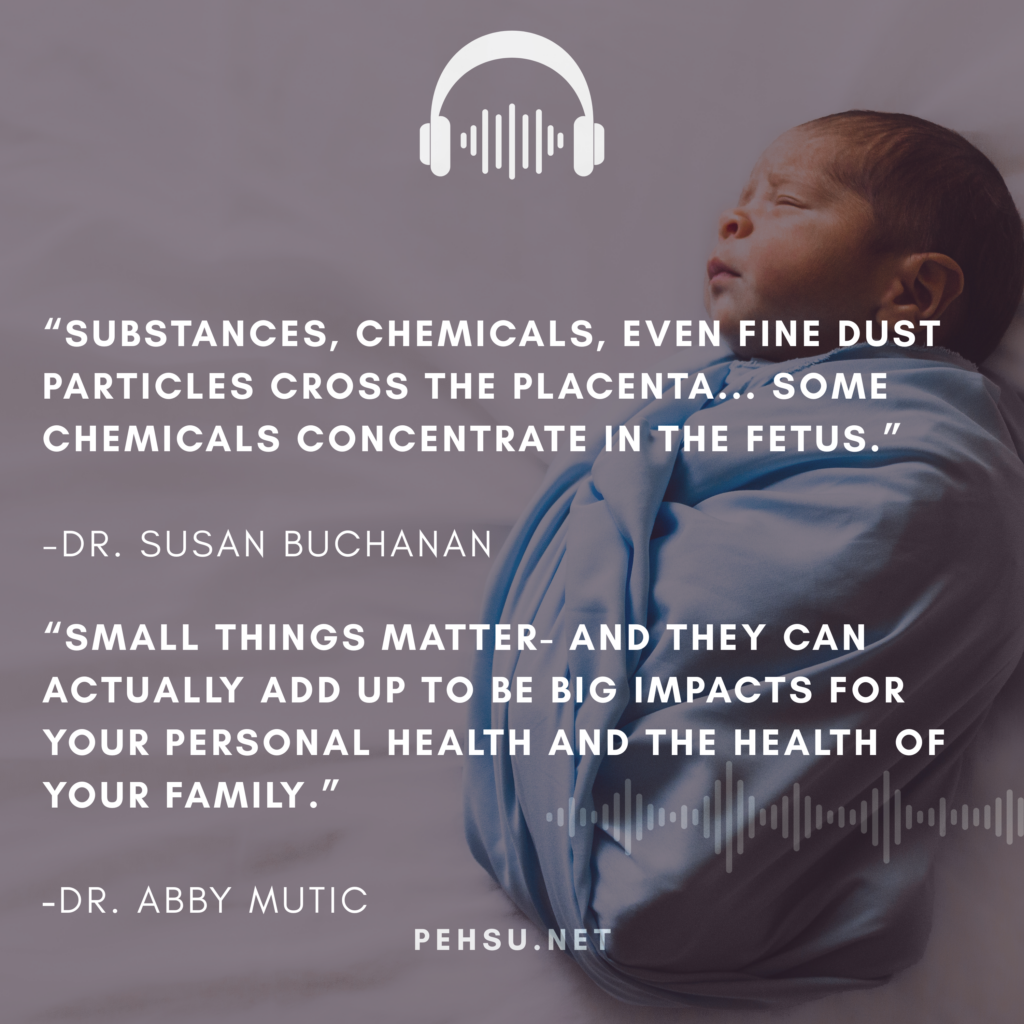
[Dr. Mutic] I love this question because this is something that I’ve worked hard to help develop within community partners. And it’s that small things matter and they can actually add up to be big impacts for your personal health and the health of your family. So, for example, we feel very overwhelmed when we think about all the exposures that may be happening around us on a daily basis, but maybe today we make one goal and that goal could be to reduce the amount of water we drink that comes in plastic bottles.
And maybe the next day we decide how to reduce using disinfectant cleaning wipes when folks around us are not sick or we don’t have a reason to disinfect our surfaces. We can use other non toxic products that can actually do the cleaning and the sanitizing. So these things add up over time and before you know it, you’re really living a pretty clean life to the best of your abilities and cutting down on some of these outside and necessary exposures.
[Dr. Buchanan] And I would say one issue that I try to include in all my lectures on pregnancy in the environment is this interesting history that used to be accepted in the understanding of pregnancy that the placenta is protective and filters out chemicals from getting to the fetus. We know now that that is absolutely not true, not only to substances, chemicals, even find dust particles cross the placenta, but some chemicals concentrate in the fetus. And so once that knowledge became more common, we now can test and we look for and examine health effects from, you know, hundreds of different substances that can cross the placenta. So it’s really changed our paradigm of looking at the health of the fetus and what their risks are.
[Whitney Sterten-Hall] That’s very good to know. Well, if you could give a caregiver or a parent or a health care provider, you can choose one piece of advice about pregnancy and the environment. What would it be? Susan, maybe we can start with you.
[Dr. Buchanan] The first thing I like to say is don’t panic. You know, Abby already mentioned that people can get overwhelmed by all the exposures. So we know that they’re already concerned about the health of the fetus and I want people to avoid any feelings and guilt about exposures because our environment includes products we use every day in the home. So I guess the one thing that I might recommend is for to people for people to use the skin deep database or some other type of database for personal care products. I do think I do think that’s something that is cleaning products as well as a little out of control is how many different types of personal care products we feel we need to use in order to feel clean. And products we need to use. We feel like we need to use in our house in our homes for our homes to feel clean. So I’d like, I try to break that mold of or that expectation that our bodies are completely bacteria free and our homes are bacteria free because it’s actually not healthy for us. We’re using all these chemicals to get rid of bacteria that our bodies actually need for a healthy immune system. I always and also you got to throw in their don’t smoke. I mean tobacco smoke is probably the number one environmental contaminant that affects our health in the most dramatic way. So during pregnancy, especially don’t smoke or be around smokers.
[Dr. Mutic] Awesome. And I would suggest that we don’t forget that we are creatures that need to eat frequently throughout the day and we need to drink water and our food and nutrition is very protective for our health. And so we talk about making all these behavioral changes, but at the beginning of each day, it starts with eating a very nutritious healthy diet and drinking lots of water. And as long as we are filling our plates with its colorful fruit and vegetables, washing them thoroughly and trying to make sure that our kids are eating things that are building protein and good cells, they’re going to be able to fight things that you can’t see and you can’t control. And so making sure that we’re really thinking about those protective factors in our life is so important and valuable.
[Whitney Sterten-Hall] That’s great. Thanks for mentioning that. Yeah, I remember drinking so much water during pregnancy and how important that was. Well, for people with more questions about pregnancy and the environment, how do they get in contact with either of you and what are some tools and resources available to the public? I know skin deep was mentioned, but where could they find them? So that could either be with, you know, PEHSU or other ones that you use. Abby, why don’t we start with you?
[Dr. Mutic] Sure. So we have a website, the Southeast PEHSU. If you Google Southeast PEHSU- P-E-H-S-U, you can find our website. We’re affiliated with Emory University and we have a lot of resources and ways to email and get in contact with us if you have personal questions. And I also mentioned the Siri database, which is wildfirehealthrests.org. And that is loaded with lots of really good tools and very well curated.
And then we did mention, yes, the Environmental Working Group has the skin deep database, but it also has other really important tools that can help guide you through some of these tools. And then we did mention that there are a lot of questions and events that arise as we become parents or even thinking about being a parent. And then finally, the EPA website for air quality is really helpful if you’re looking to spend time outside and you want to check the quality of the air.
[Dr. Buchanan] And our PEHSU is hosted at University of Illinois Chicago for Region 5. And the name of our Pediatric Environmental Health Specialty Unit is the Great Lakes Center for Reproductive and Children’s Environmental Health. And we also have a website, children’s enviro.uic.edu. And we have a email address that gets checked on a daily basis. If you want to email us, it’s also children’s enviro. And that’s at uic.edu. One of my favorite resources is the program on reproductive health and the environment at UCSF, and they have a toxic matters website used to be a series of brochures now I think it’s mostly available online. And these are really nice information sources for the public on how to avoid exposures at home. They have a section on the workplace and in the community at large. Great.
[Whitney Sterten-Hall] I’ll put all those resources in the show notes so people have access to them. And thank you both for being on the podcast. I feel like I learned so much and this is such an important issue. And I think pregnancy can feel isolating with all these decisions you have to make. So I hope that this is helpful to people. I’m sure it will be. And thank you for all the work you both do to keep children and family safe from environmental hazards. Sure.
[Dr. Buchanan] Sure, Whitney, thanks for the invite.
[Dr. Mutic] Thanks for having us.